.jpg)
Sogoshinrigakunyumon (総合心理学入門) (高橋康介先生とりまとめ), June 8, 2026, First period
AN110, OIC, Ritsumeikan University, Ibaraki, Osaka, Japan
Introduction to my study on visual illusions
(私が研究してきた錯視の紹介)
Akiyoshi Kitaoka (北岡明佳) (College of Comprehensive Psychology, Ritsumeikan University) email
Hello, everyone. This is Kitaoka.
(こんにちは。「心理学概論」担当の北岡です)
Illusion World Exhibition 2023 in the Ministry of Education, Culture, Sports,
Science and Technology, Tokyo
(「面白い目の錯覚 錯視の世界展」 文部科学省1階 2023年 高橋康介先生とのコラボ)
Today's talk
(本日のトーク)
1. Kitaoka's biography(北岡の略歴)
2. Kitaoka's latest presentation(北岡の最近の学会発表)
3. Various illusion works by Kitaoka(北岡の錯視作品いろいろ)
4. Q & A
1. Kitaoka's biography
(北岡の略歴)
Name (氏名): Akiyoshi KITAOKA (北岡明佳: きたおか あきよし)
Age (年齢): 64 years old (64歳)
Date of birth (生年月日): August 19, 1961 (1961年(昭和36年)8月19日)
Place of birth (生誕地): Kochi city, Kochi prefecture (高知県高知市)
Education (学歴):
1980 Graduated from Aoyama High School (1980年 東京都立青山高等学校卒業)
1984 Graduated from the College of Biological Sciences, University of Tsukuba (1984年 筑波大学第二学群生物学類卒業)
1991 Completed the doctoral program of psychology at the University of Tsukuba (1991年 筑波大学大学院博士課程心理学研究科修了)
Degree (学位): Ph.D (教育学博士)
Work history (職歴):
1991-2001 Researcher, Tokyo Metropolitan Institute for Neuroscience, Fuchu, Tokyo (東京都神経科学研究所 医学心理学研究部門 主事研究員)
2001-2006 Associate professor, College of Letters, Ritsumeikan University (立命館大学文学部 助教授)
2006-2015 Professor, College of Letters, Ritsumeikan University (立命館大学文学部 教授)
2015-present Professor, College of Comprehensive Psychology, Ritsumeikan University (立命館大学総合心理学部 教授)
Professional Affiliations (所属学会):
Japanese Psychological Association (日本心理学会(日心))
Japanese Psychonomic Society (日本基礎心理学会(基礎心))
Japanese Society for Cognitive Psychology (日本認知心理学会(認知心))
Vision Society of Japan (日本視覚学会(視覚学会))
Color Science Association of Japan (日本色彩学会(色彩学会))
Japanese Acadeny of Facial Studies (日本顔学会(顔学会))
Research interest (研究分野)
Visual illusion (錯視)

2. Kitaoka's latest presentation
(北岡の最近の学会発表)
Kitaoka, A., Anstis, S., & Kobayashi, Y. (2006). Footsteps illusion. VSS 2026 Demo Night, May 18, 2026, St. Pete Beach. Movie
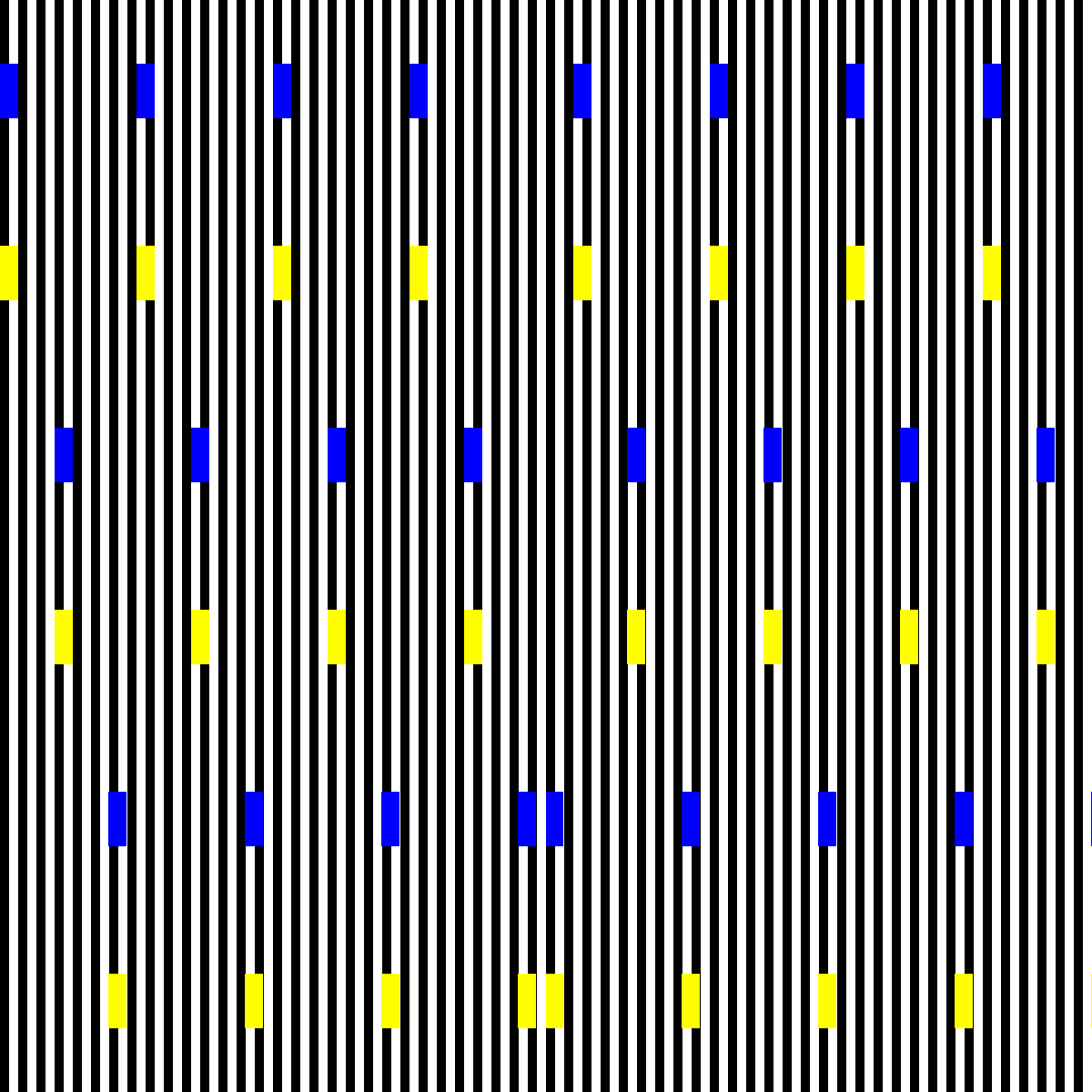
Footsteps illusion: The rectangles move to the right at a constant speed,
yet they appear to speed up or slow down.
(フットステップ錯視: 長方形は一定の速度で右に動いているが、速度が速くなったり遅くなったりして見える)
References
Anstis, S. M. (2001). Footsteps and inchworms: Illusions show that contrast modulates motion salience. Perception, 30, 785–794. https://doi.org/10.1068/p3211
Kitaoka, A. & Anstis, S. (2021). A review of the footsteps illusion. Journal of Illusion, 2, #5612, 1-22. https://doi.org/10.47691/joi.v2.5612
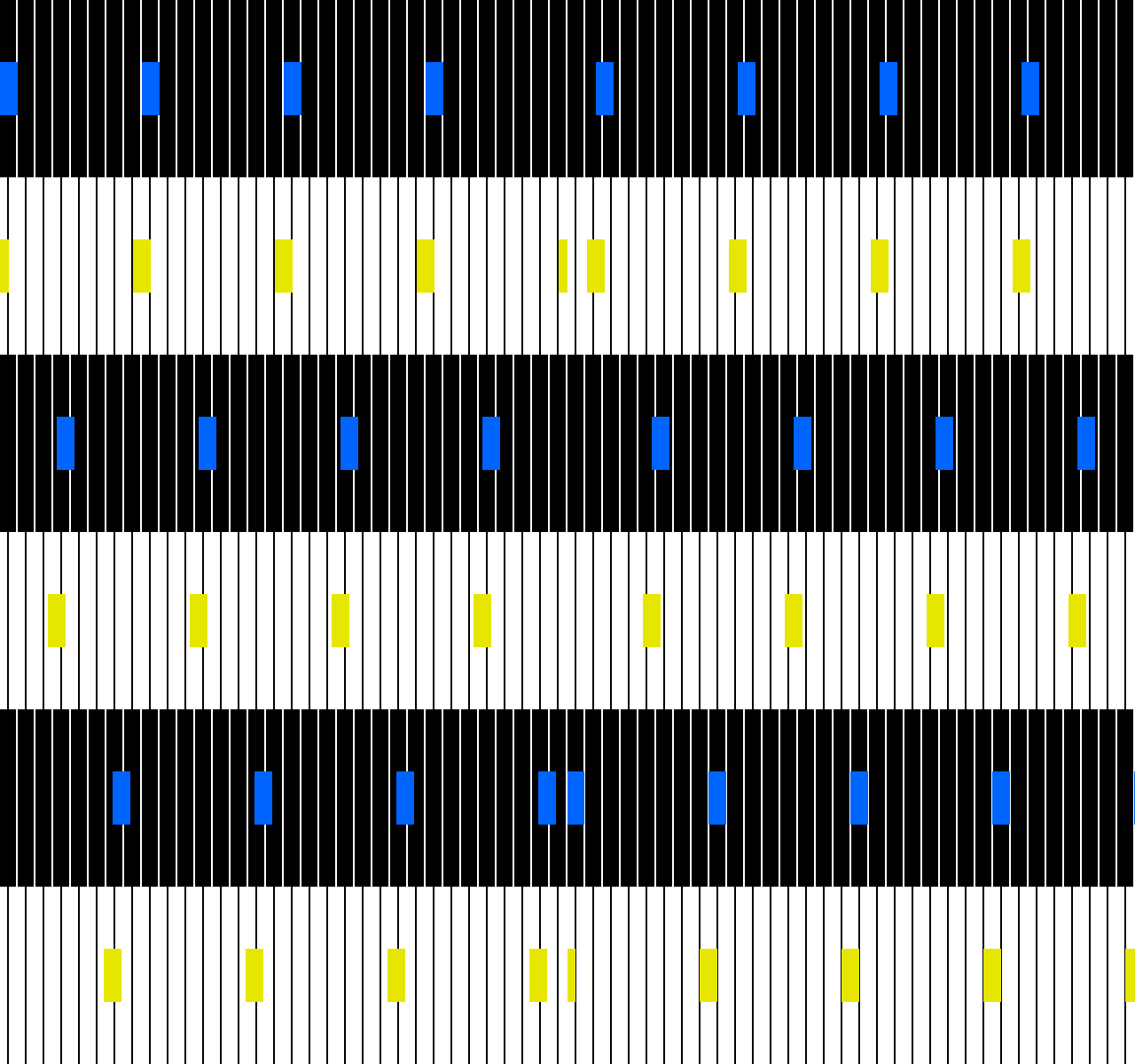
Kickback illusion: The rectangles move to the right at a constant speed,
yet they appear to move back when their leading and trailng edges pass
the pinstripes.
(キックバック錯視: 長方形は一定の速度で右に動いているが、両端がピンストライプにかかる時にバックするように見える)
References
Howe, P. D. L., Thompson, P. G., Anstis, S., Sagreiya, H., & Livingstone,
M. S. (2006). Explaining the footsteps, belly dancer, Wenceslas and kickback
illusions. Journal of Vision, 6, 1396–1405. https://doi.org/10.1167/6.12.5
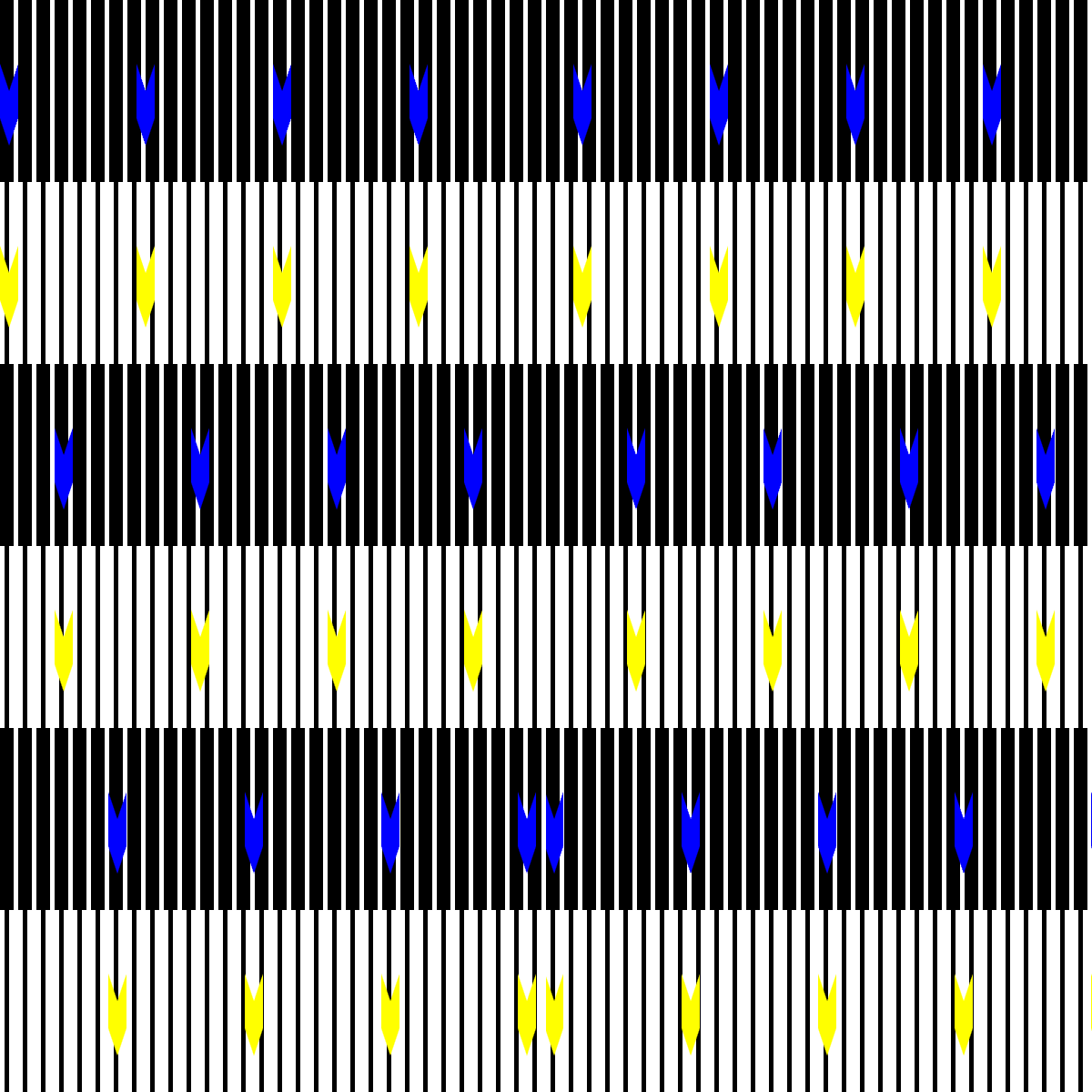
Footsteps illusion with up-and -down movement: The rectangles move straight to the right at a constant speed, yet they appear to move up and down.
(上下動付きフットステップ錯視: 長方形は一定の速度で一直線状に右に動いているが、上下して見える)
References
Kitaoka, A., Anstis, S., & Kobayashi, Y. (2006). Footsteps illusion.
VSS 2026 Demo Night, May 18, 2026, St. Pete Beach. Movie
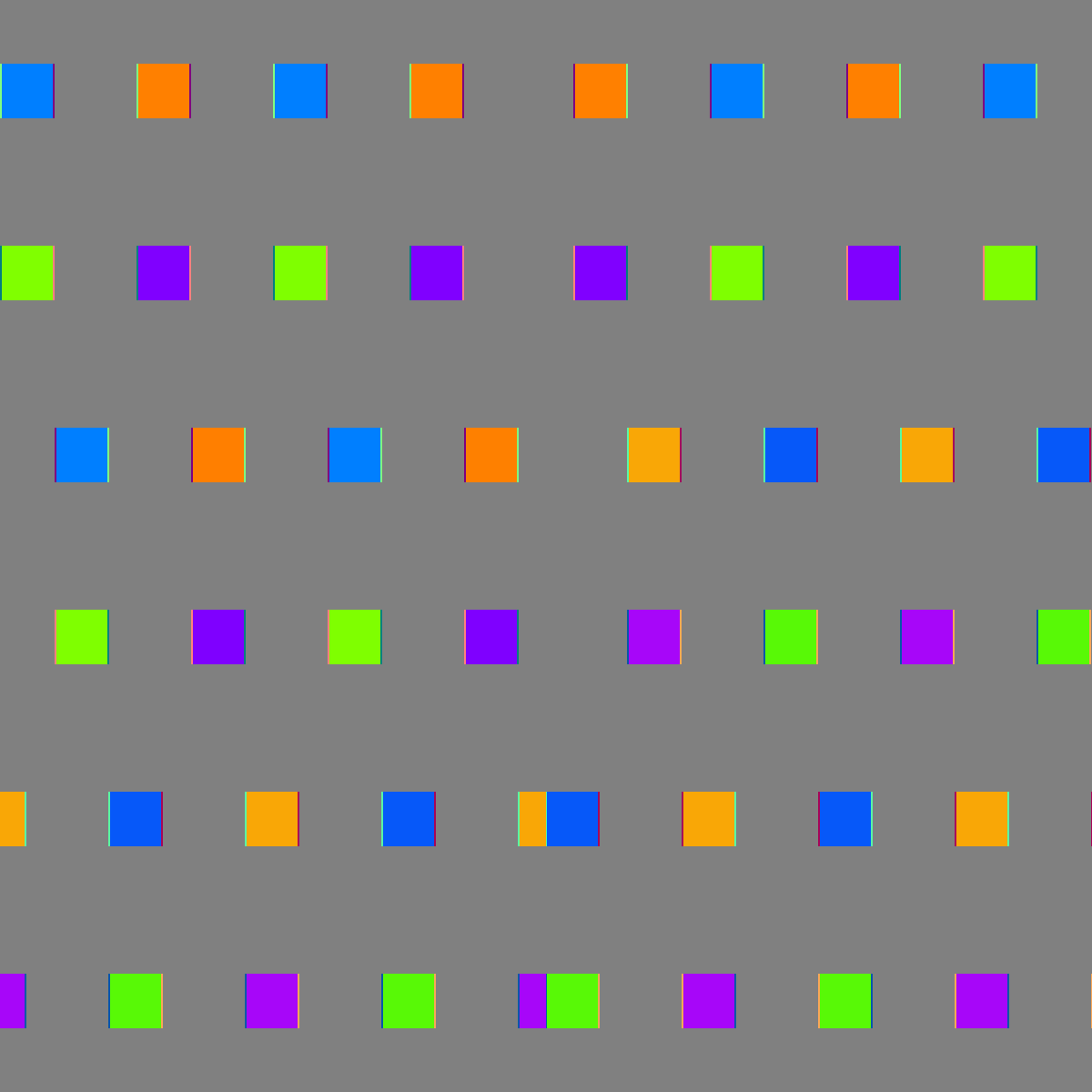
Footsteps illusion based upon the luminance change-induced motion illusion:
The squares move straight to the right at a constant speed, yet they appear
to speed up or slow down.
(輝度変調誘導性運動錯視によるフットステップ錯視: 正方形は等速で右に動いているが、速度が速くなったり遅くなったりして見える)
created on May 31, 2026 (2026年5月31日制作)
References
Anstis (1970), Kitaoka (2006), Flynn & Shapiro (2018), じゃがりきん @jagarikin
(2021, 2026)
Anstis, S. M. (1970). Phi movement as a subtraction process. Vision Research, 10, 1411-1430. https://www.sciencedirect.com/science/article/pii/0042698970900921
Flynn, O. F. & Shapiro, A. G. (2018). The perpetual diamond: contrast reversals along thin edges create the appearance of motion in objects. i-Perception, 9(6), 1–6. https://journals.sagepub.com/doi/full/10.1177/2041669518815708
じゃがりきん @jagarikin
https://x.com/jagarikin/status/1348136474517012481 (posted on January 10, 2021)
https://x.com/jagarikin/status/2006428954434089352 (posted on January 1, 2026)
Kitaoka, A. (2006). Configurational coincidence among six phenomena: A comment on van Lier and Csathó (2006). Perception, 35, 799-806. https://journals.sagepub.com/doi/10.1068/p5319b
Arthur Shapiro @agshapiro2 https://x.com/agshapiro2/status/1135286867182706688 (posted on June 3, 2019)
3. Various visual illusion works by Kitaoka
(北岡の錯視作品いろいろ)
No. 1 in popularity (たぶん人気ナンバー1)
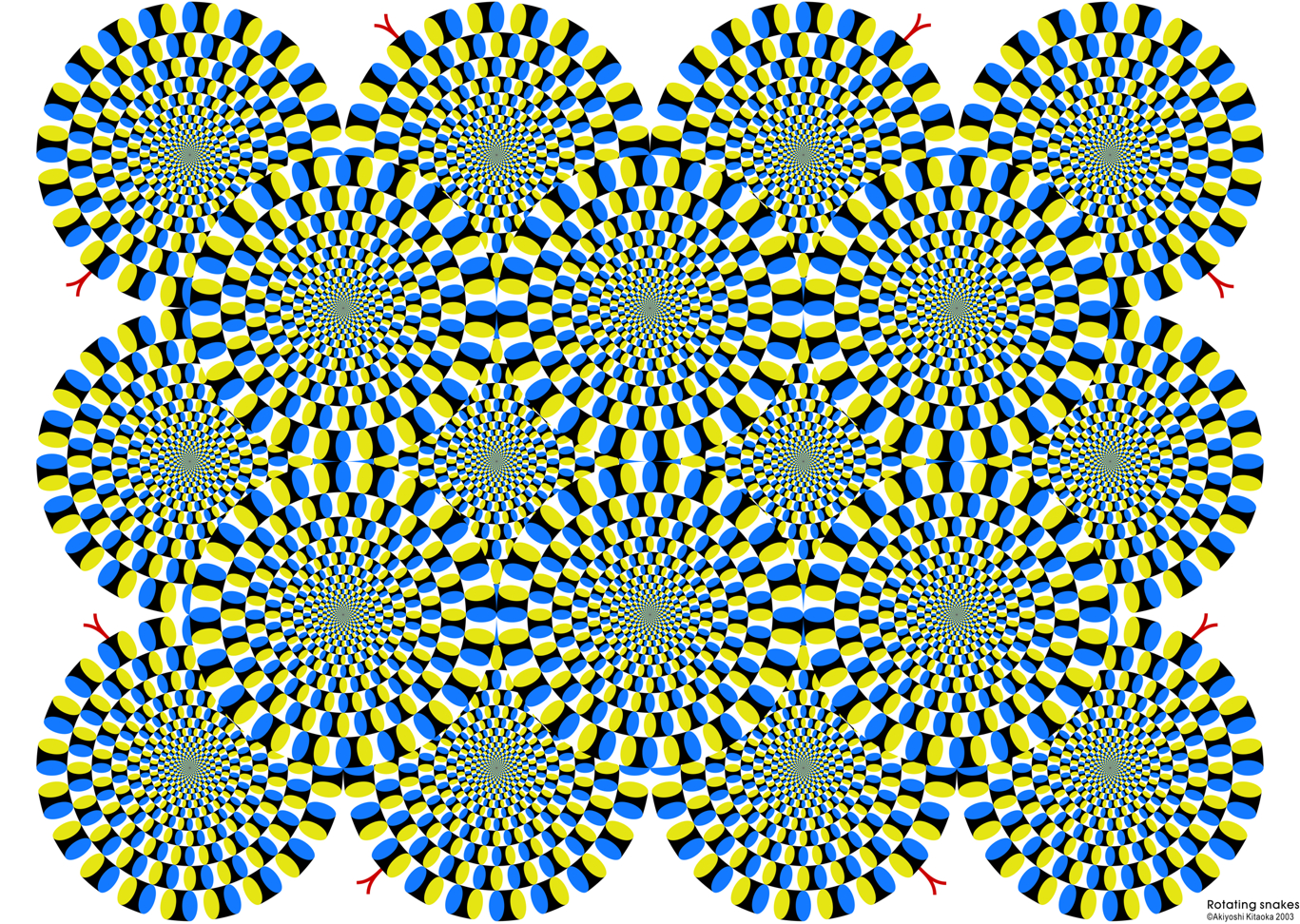
"Rotating snakes"
(蛇の回転)
Disks appear to rotate.
(円盤が回転して見える)
Copyright Akiyoshi Kitaoka 2003
Kitaoka, A. (2017). The Fraser-Wilcox illusion and its extension. A. G. Shapiro and D. Todorović (Eds.), The Oxford Compendium of Visual Illusions, Oxford University Press, pp. 500-511. PDF --- Figures
No. 2
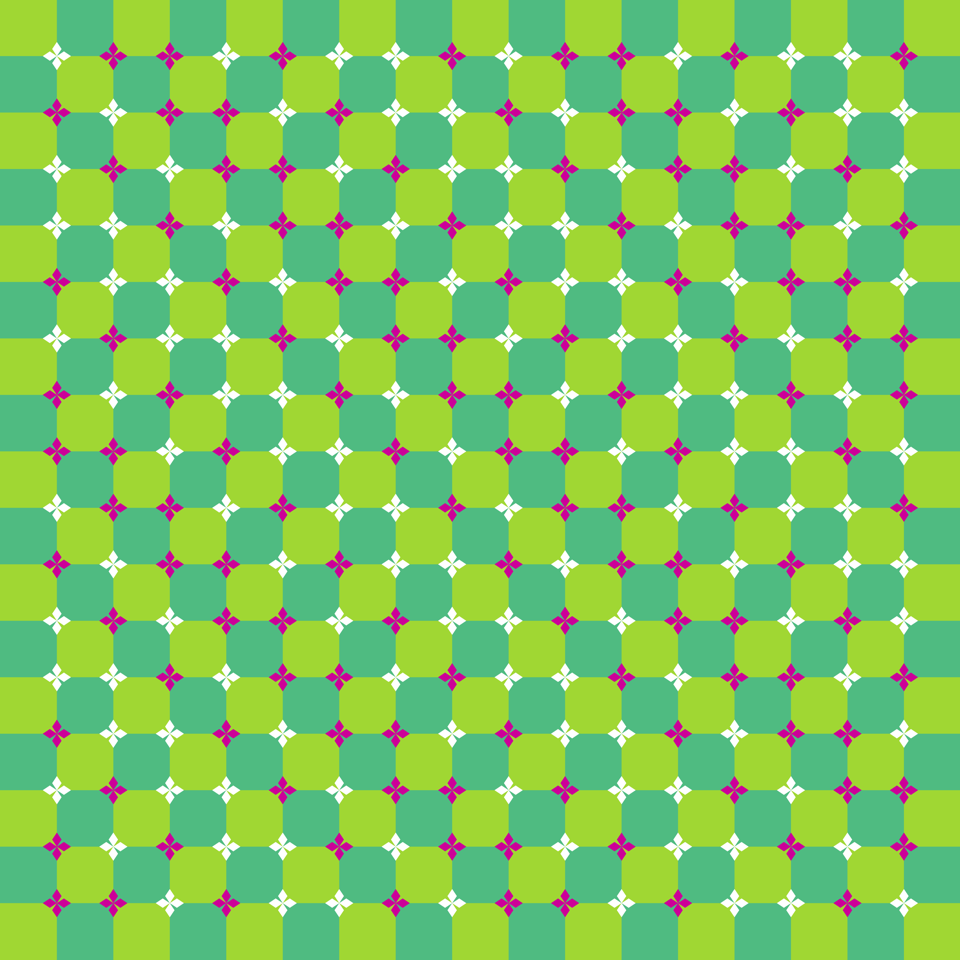
"Primrose field"
(サクラソウの畑)
The image appears to wave.
(絵が波打って見える)
Copyright Akiyoshi Kitaoka 2002
No. 3

"Green and blue spirals"
(緑と青の渦巻き)
There appear to be spirals of light green or light blue. Actually, they
are identical (r = 0, g = 255, b = 150).
(黄緑と水色の渦巻きがあるように見えるが、同じ色である)
Copyright A.Kitaoka 2003
No. 4

"A
bulge"
(膨らみの錯視)
The floor appears to bulge out, though this image consists of only squares.
(すべて垂直・水平に並べた正方形でできているが、辺が傾いて見え、全体として膨らんで見える)
Copyright A.Kitaoka 1998
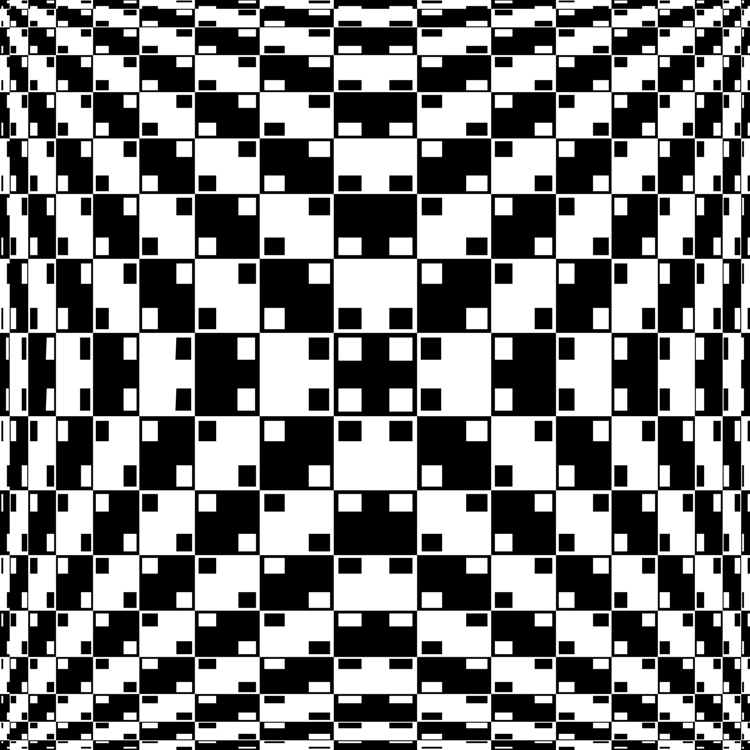
"Cushion"
(クッション)
This image appears to bulge out, though it consists of squares and rectangles
aligned vertically or horizontally.
(すべて垂直・水平に並べた正方形と長方形でできているが、辺が傾いて見え、全体として膨らんで見える)
Copyright A.Kitaoka 1998
No. 5
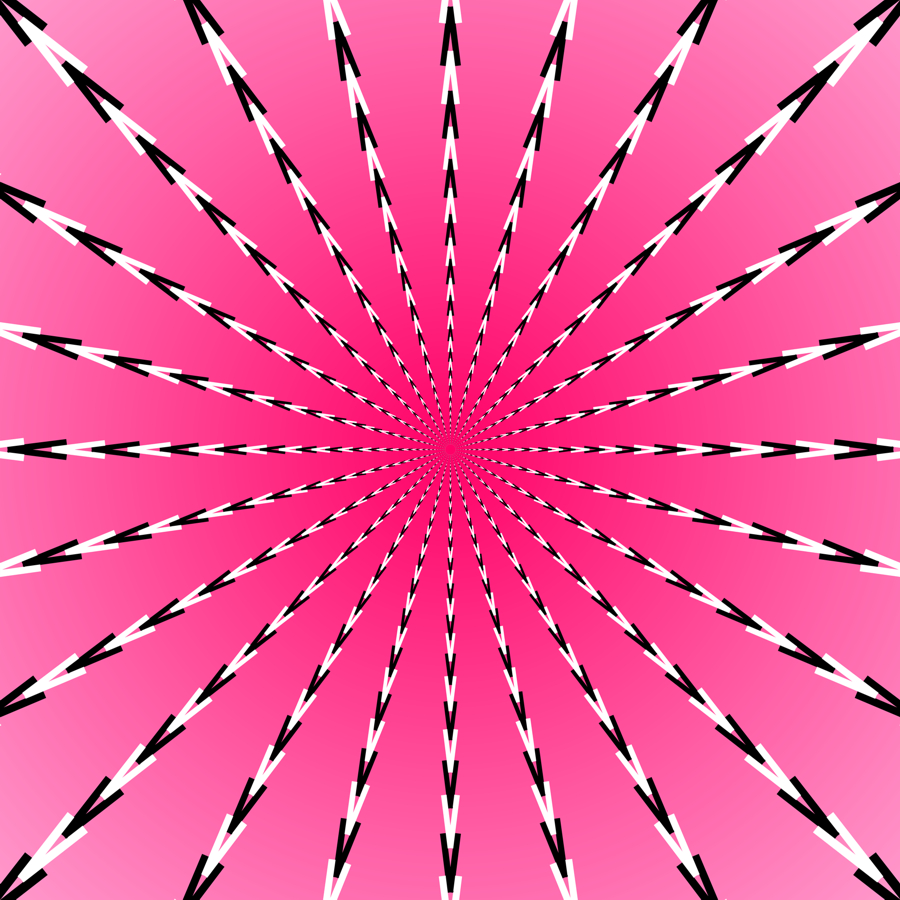
"Hatpin urchin (pink)"
(ガンガゼ・ピンク)
The image appears to wiggle in the radial direction.
(放射状の方向にガクガクして見える)
Copyright Akiyoshi Kitaoka 2013 (November 19)

No. 6
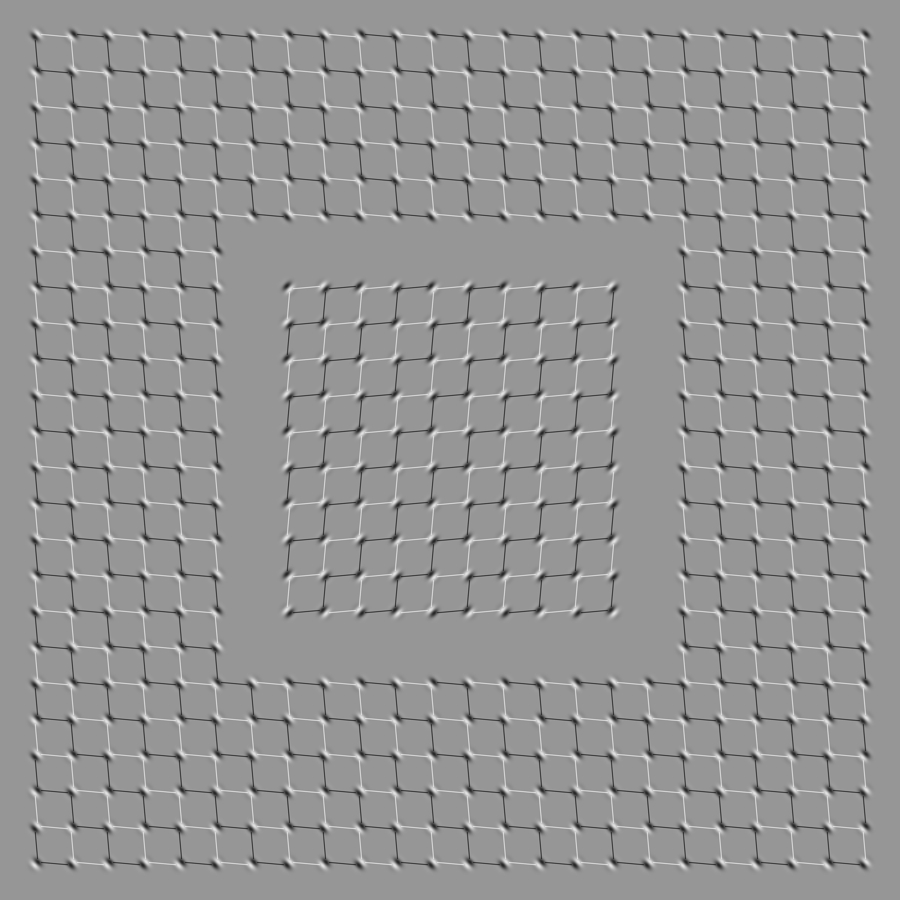
"Drifting Emboss illusion"
(sine type)
(エンボスドリフト錯視)
The inset appears to move.
(内側のパターンが動いて見える。外側のパターンも動いて見える人もいる)
Copyright Akiyoshi Kitaoka 2016 (February 15)
A work that was popular a while back 1
(少し前に人気を博した作品)
When shooting with a telephoto lens, the train you're on appears to move slowly, whereas shooting with a wide-angle lens makes it seem like it's moving quickly. This phenomenon is sometimes referred to as the FOV effect.
(望遠レンズで撮影すると乗車している電車が遅く走っているように感じられ、広角レンズで撮影するとそれが速く走っているように感じられる効果。FOV効果と呼ぶ人もいる)
Differences in perceived speed pic.twitter.com/V42VxQDRZ3
— Akiyoshi Kitaoka (@AkiyoshiKitaoka) February 4, 2020
知覚速度自由自在 pic.twitter.com/lHMg6Bv7oG
— Akiyoshi Kitaoka (@AkiyoshiKitaoka) December 19, 2019
A work that was popular a while back 2
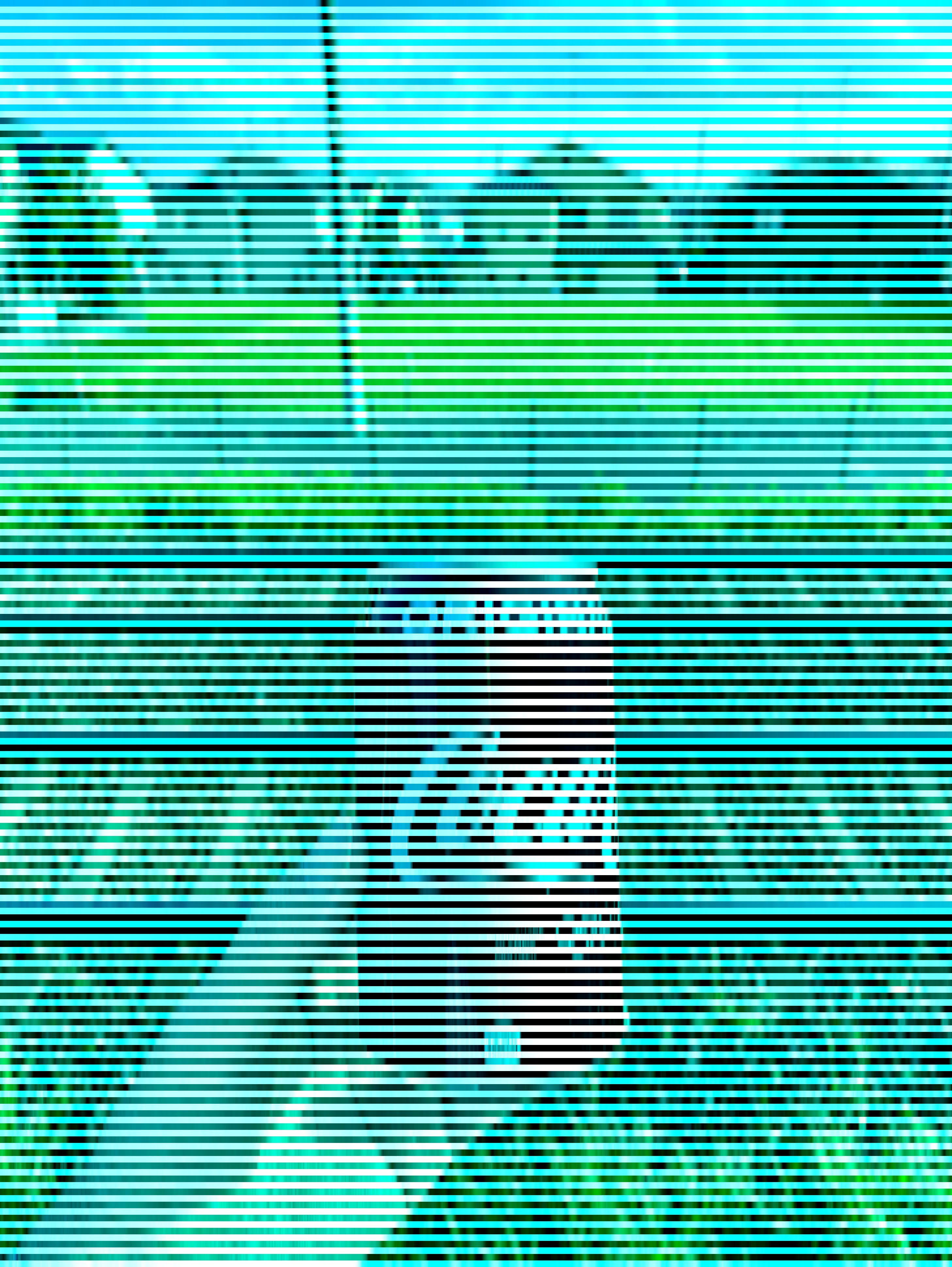
"Illusory reddish coke can"
(錯視的に赤いコーラ缶)
The Coca-Cola can appears to be reddish, though it consists of black and
white stripes.
(コカ・コーラの缶は赤く見えるが、画素としては黒と白の縞模様である)
Copyright Akiyoshi Kitaoka 2021 (October 13)
A work that was popular a while back 3
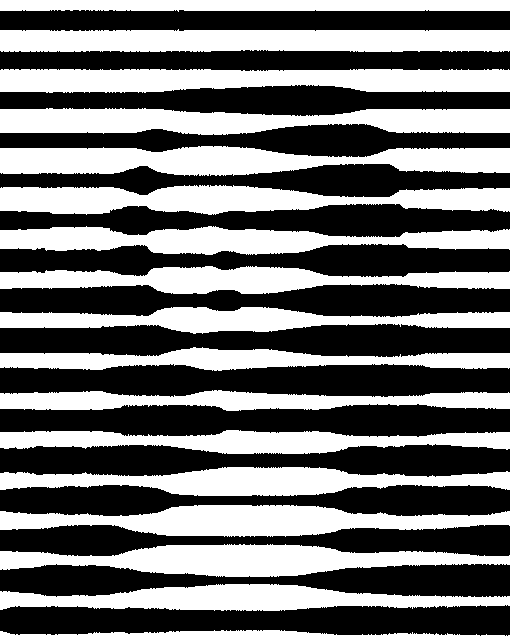
"Who is it?"
(誰かな?)
This is a intensely degraded image, but it can be perceived as it is (Mona
Lisa).
(この画像は大いに解像度を下げて劣化した画像だが、それでもモナリザとわかる)
Copyright Akiyoshi Kitaoka 2022 (January 30)
A work that was popular a while back 4
(additive color change version)
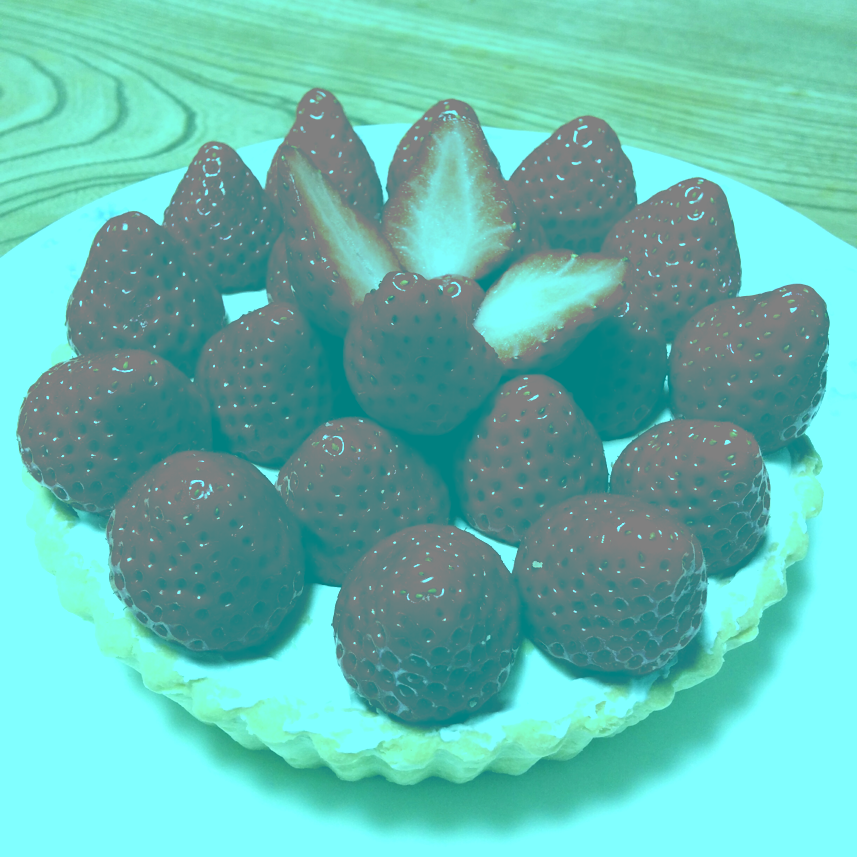
Edwin Land's two-color method version
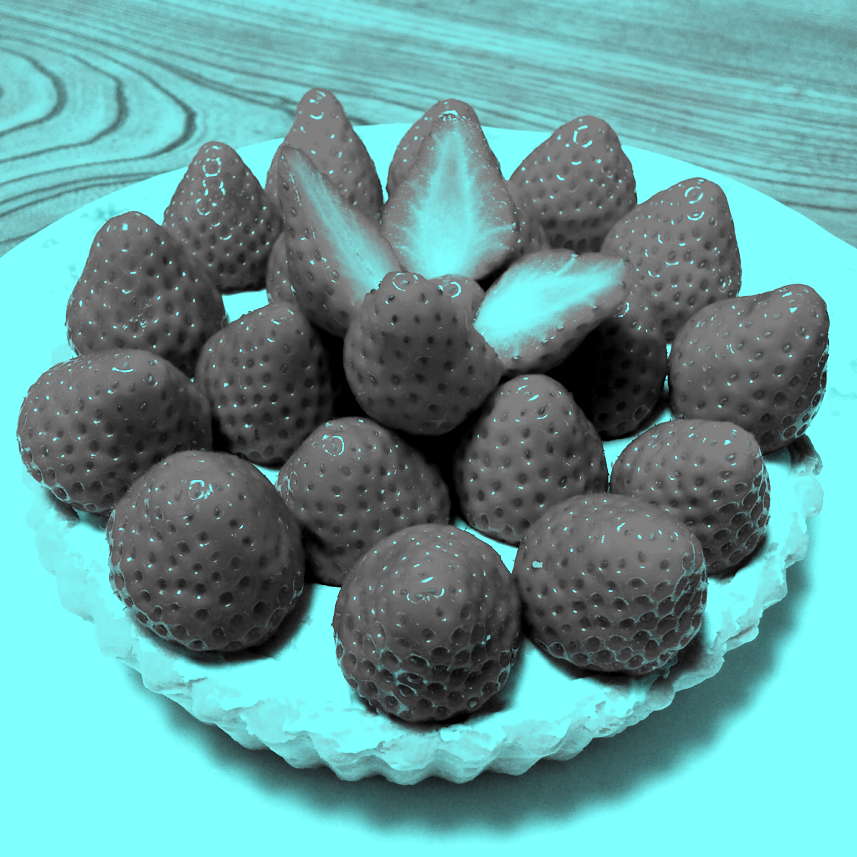
Strawberries appear to be reddish, though the pixels are not.
(イチゴは赤く見えるが、画素は赤くない)
Sometimes popular 1
(時々人気が出る作品)
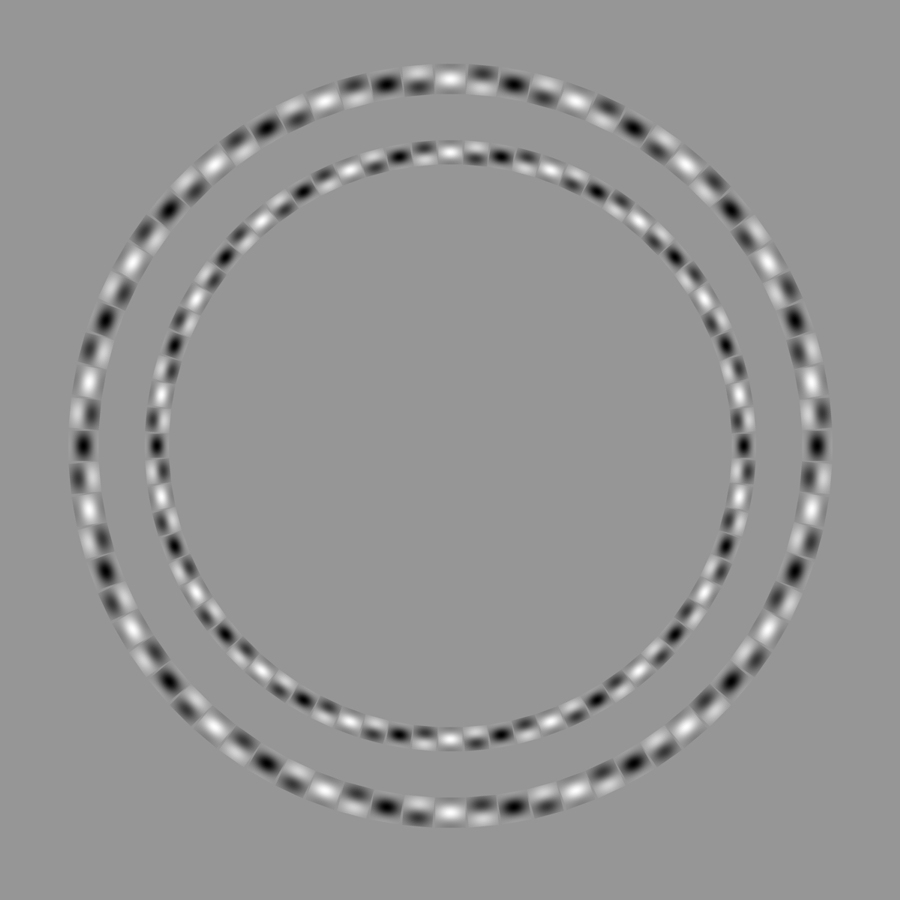
"Entangling illusion"
(ほつれ錯視)
The two concentric rings appear to be entangled.
(同心円がこんがらがって見える)
Copyright Akiyoshi Kitaoka 2019 (May 1)
Sometimes popular 2
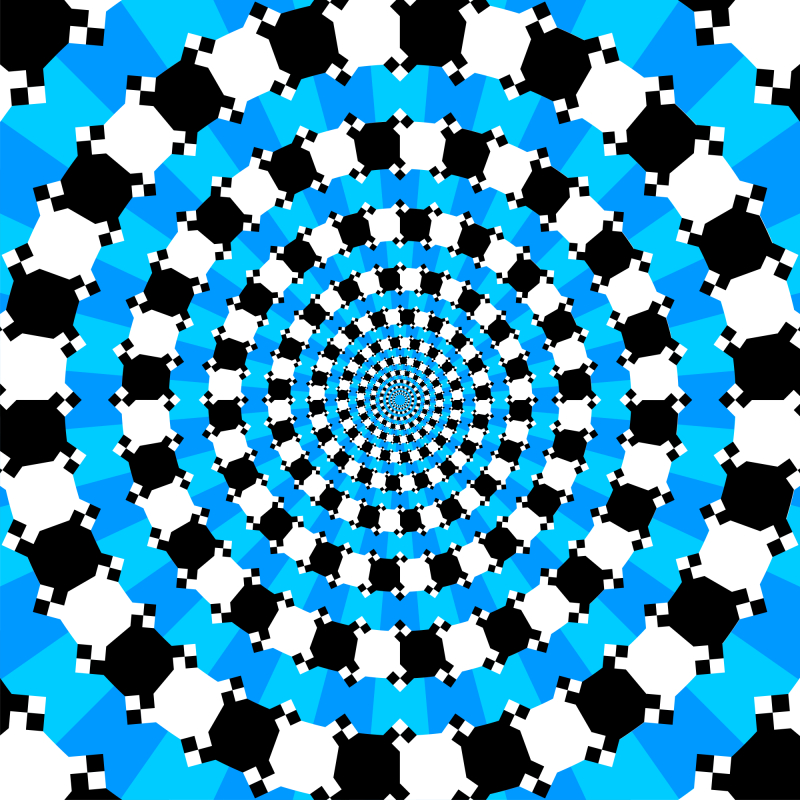
"Water spirals"
(水の渦巻き)
Concentric rings appear to be spirals.
(同心円が渦巻きに見える)
Copyright Akiyoshi Kitaoka 2009 (March 3)
Sometimes popular 3
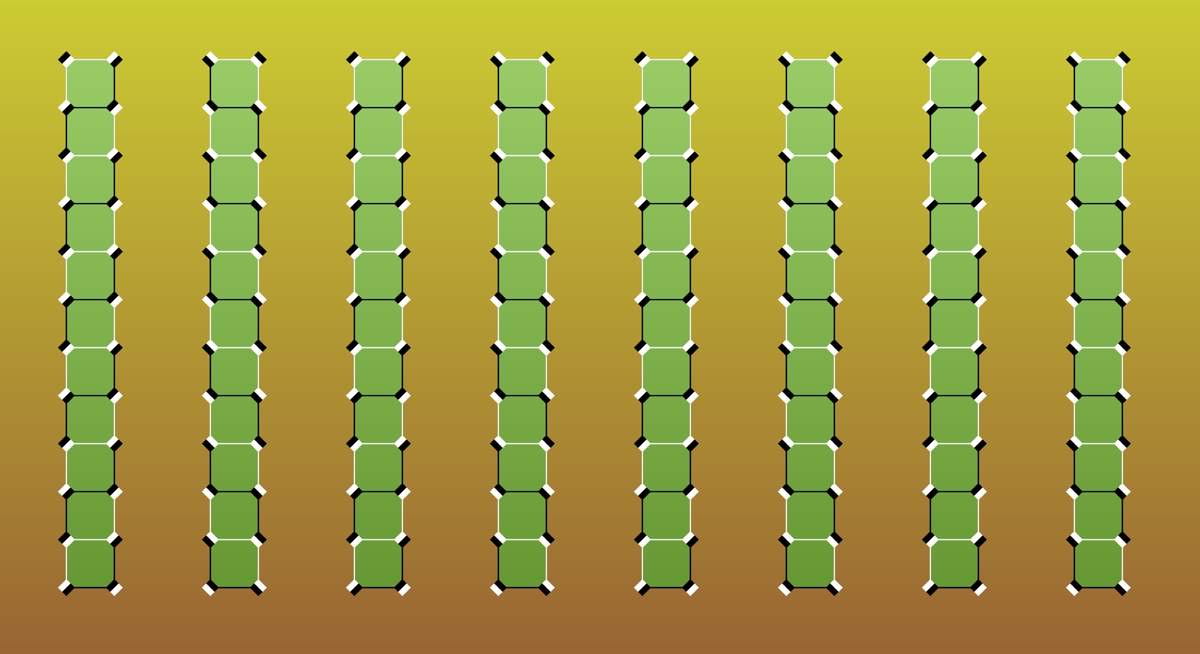
"Bamboos"
(竹林)
Columns appear to move.
(竹が動いて見える)
Copyright Akiyoshi Kitaoka 2014 (January 5)
Sometimes popular 4
Some observer sees red in front of blue, and another observer sees blue in front of red. pic.twitter.com/zg4eDTkWCL
— Akiyoshi Kitaoka (@AkiyoshiKitaoka) November 14, 2019
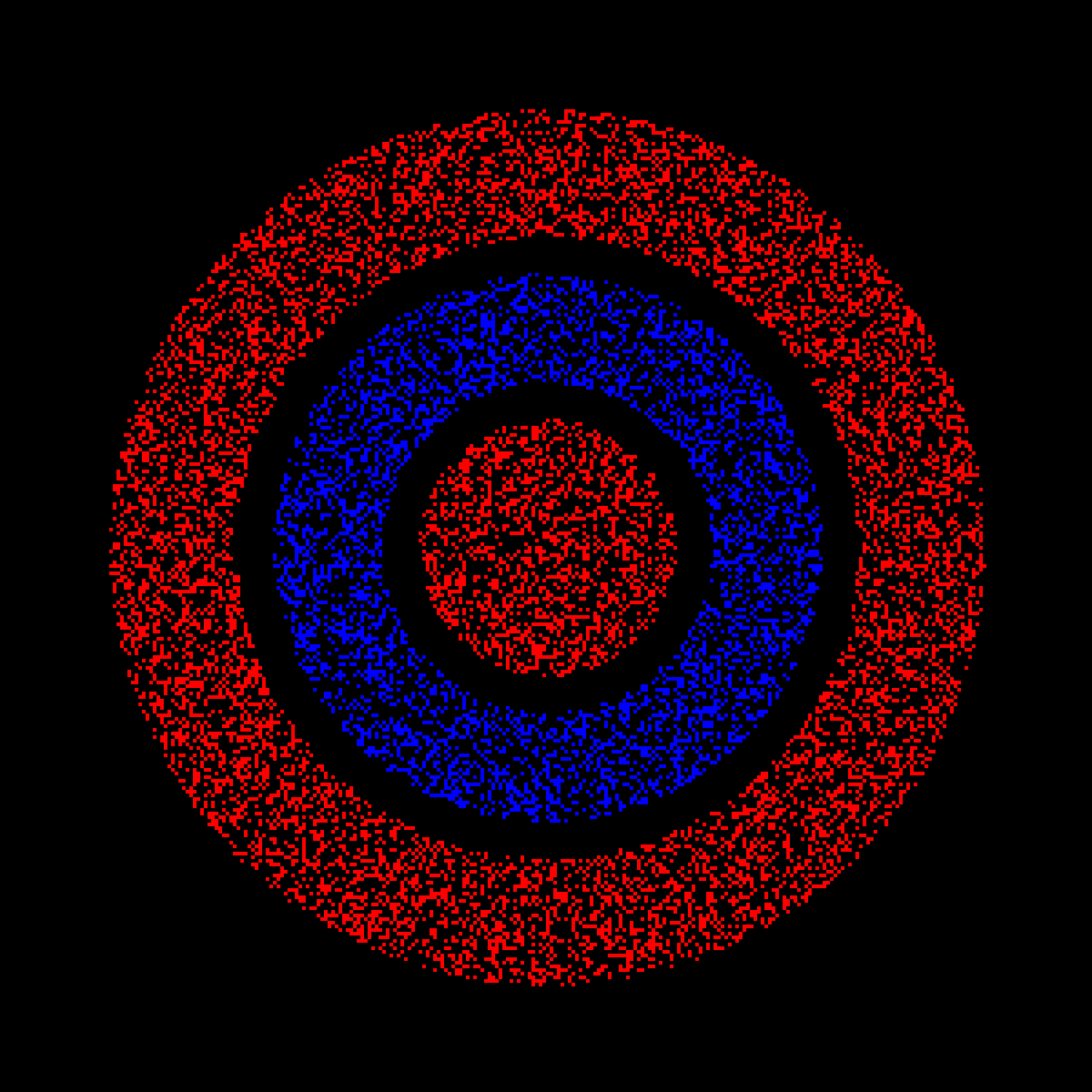
Chromostereopsis
(色立体視)
People can be divided into those who perceive the red object as closer and those who perceive the blue object as closer (though some perceive them to be at the same distance). While the majority (60–70%) perceive the red object as closer, those who perceive the blue object as closer—though a relative minority—account for 10–20%. Therefore, they are not exactly few in number. This phenomenon is an example of binocular stereopsis, which arises from binocular disparity caused by chromatic aberration.
(赤が手前に見える人と青が手前に見える人にわかれる(同じ奥行きに見える人もいる)。赤が手前に見える人が過半数(6、7割)であるが、青が手前に見える人は相対的に少数とは言え1、2割いるので、少ないというほどではない。色収差によってつくられた両眼視差に基づく両眼立体視である)
Sometimes popular 5
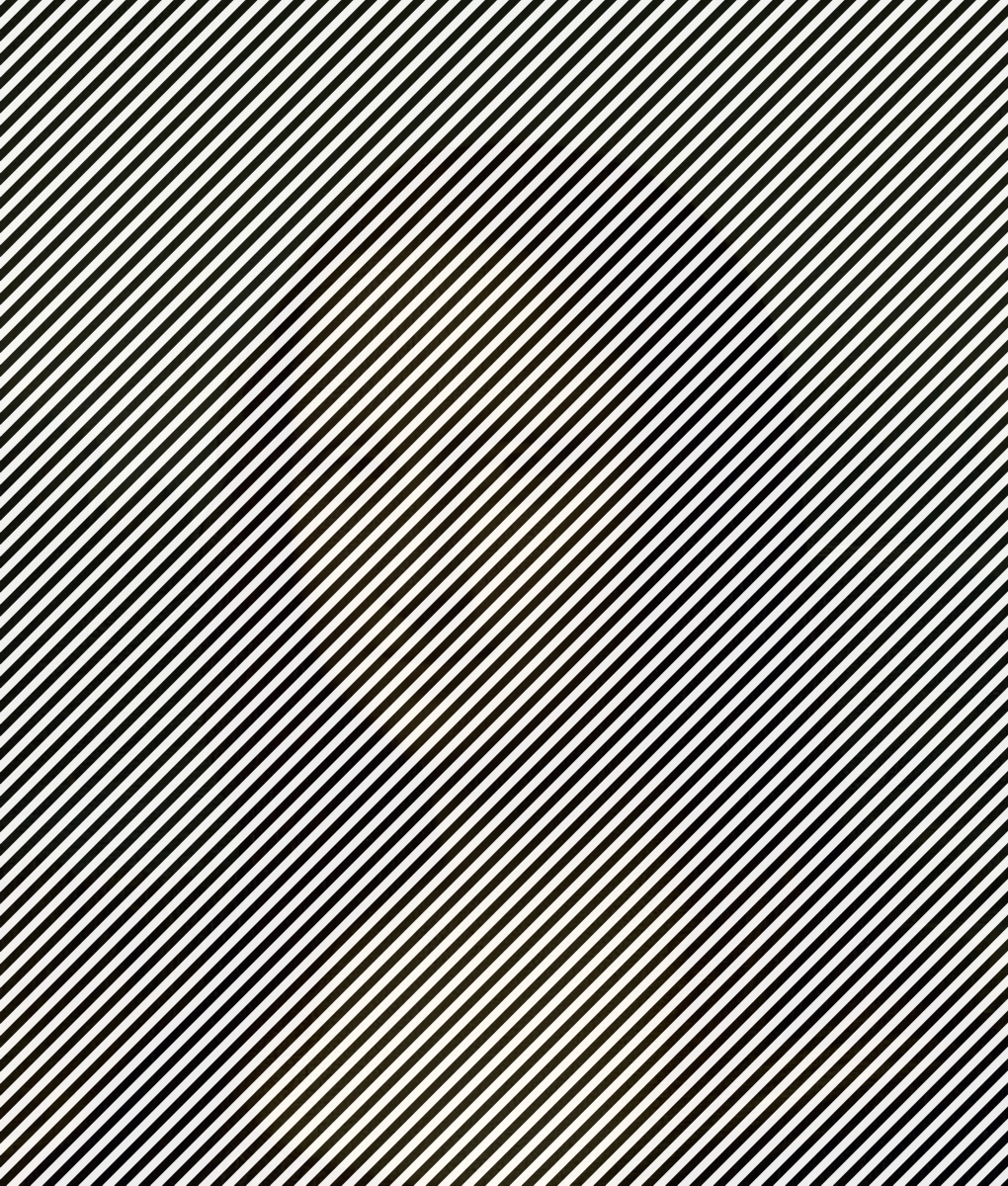
Kind of hidden image
(隠し絵の一種)
Mona Lisa is hidden. She is visible when you squint, when you move the
image, or when you contract the image.
(モナリザが隠れている。図を動かしたり、縮小したり、遠くから見たりすれば見える)
Sometimes popular 6
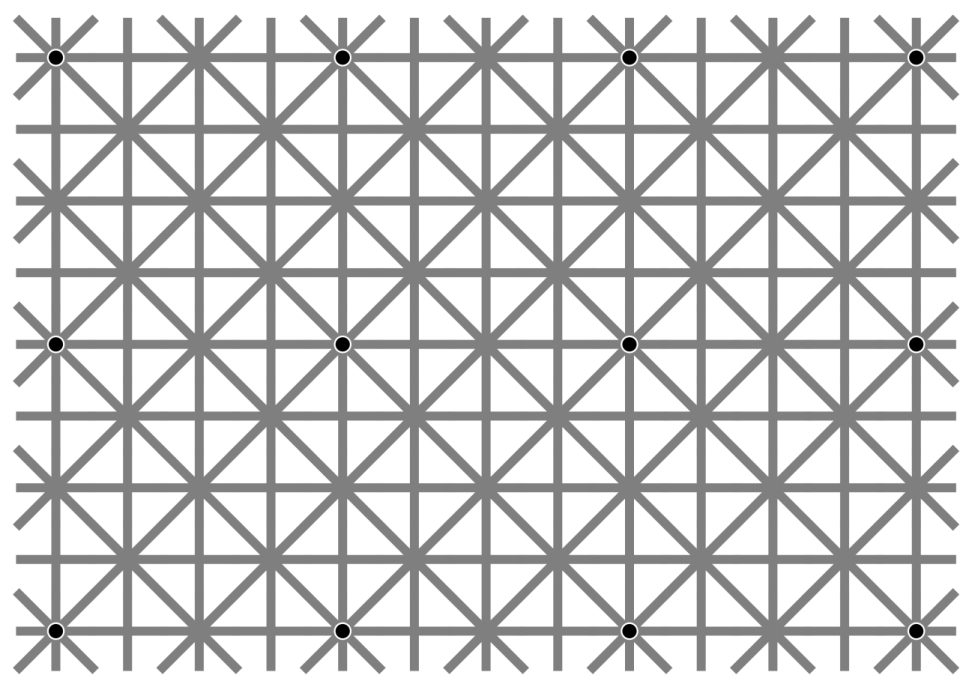
"Ninio's extinction illusion"
(ニニオの消失錯視)
There are twelve dots at crosses, but only a few dots are visible simultaneously.
(灰色の線の交点に12個の黒いドットがあるが、一度にすべては見ることができない)
Ninio, J. & Stevens, K. A. (2000). Variations on the Hermann grid: an extnction illusion. Perception, 29, 1209-1217.
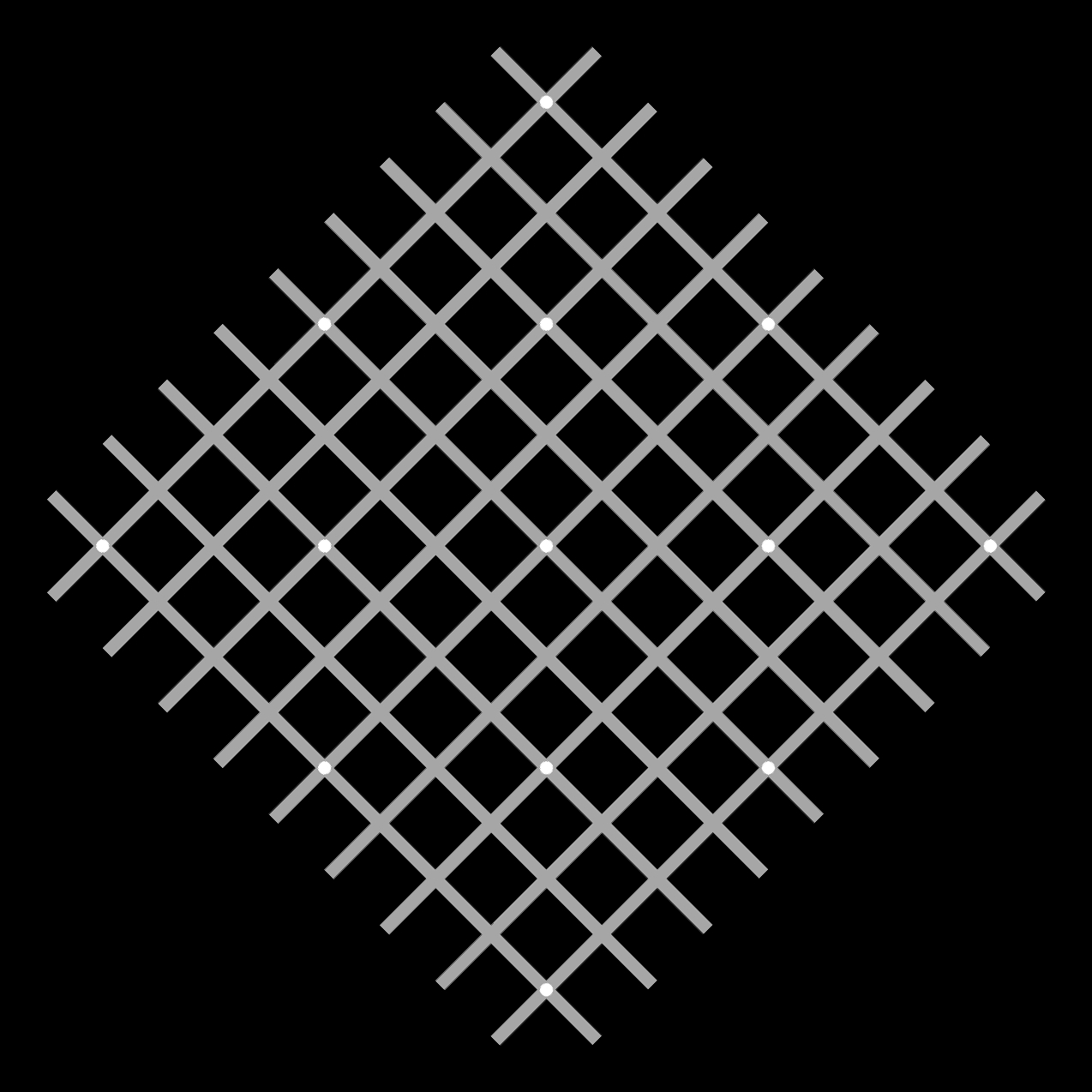
McAnany's extinction illusion
(マッカナニー型の消失錯視)
There are actually 13 white dots at the crosses, yet they cannot be seen
simultaneously.
(同時に13個の白いドットを知覚することができない)
McAnany, J. J. and Levine, M. W. (2004) The blanking phenomenon: a novel form of visual disappearance. Vision Research, 44, 993-1001.
Sometimes popular 7
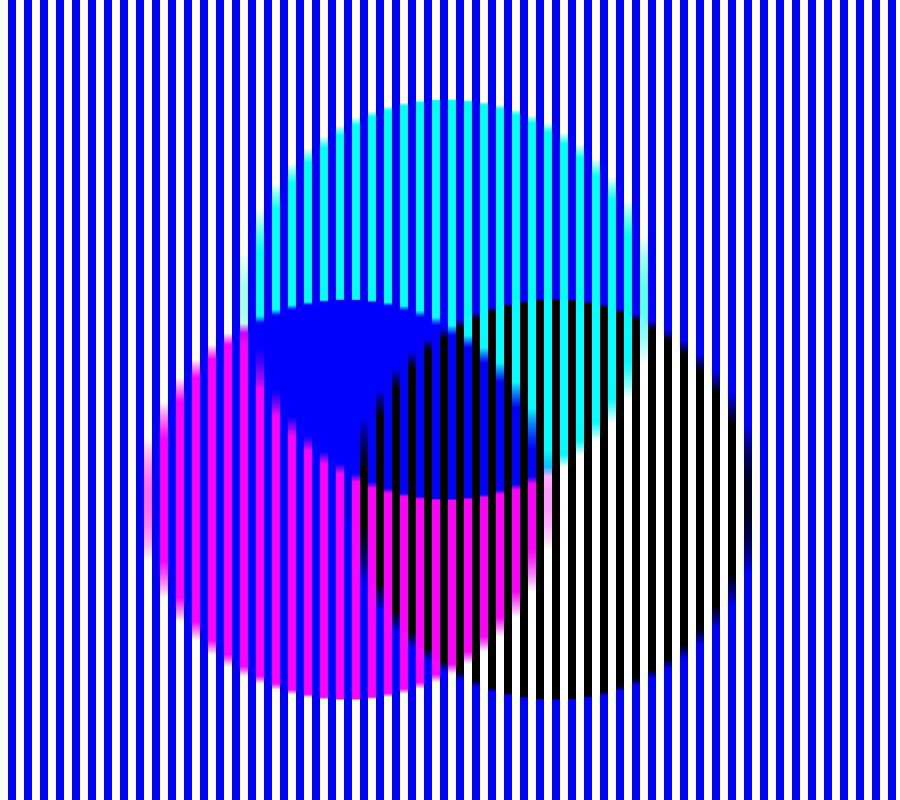
"Illusory yellow"
(錯視的黄色)
The area of illusory yellow consists of black and white stripes.
(右下の円に錯視的な黄色が見えるが、白と黒の縞模様である)
Copyright Akiyoshi Kitaoka 2021 (June 12)
My favorite 1
(自分好みのナンバー1)
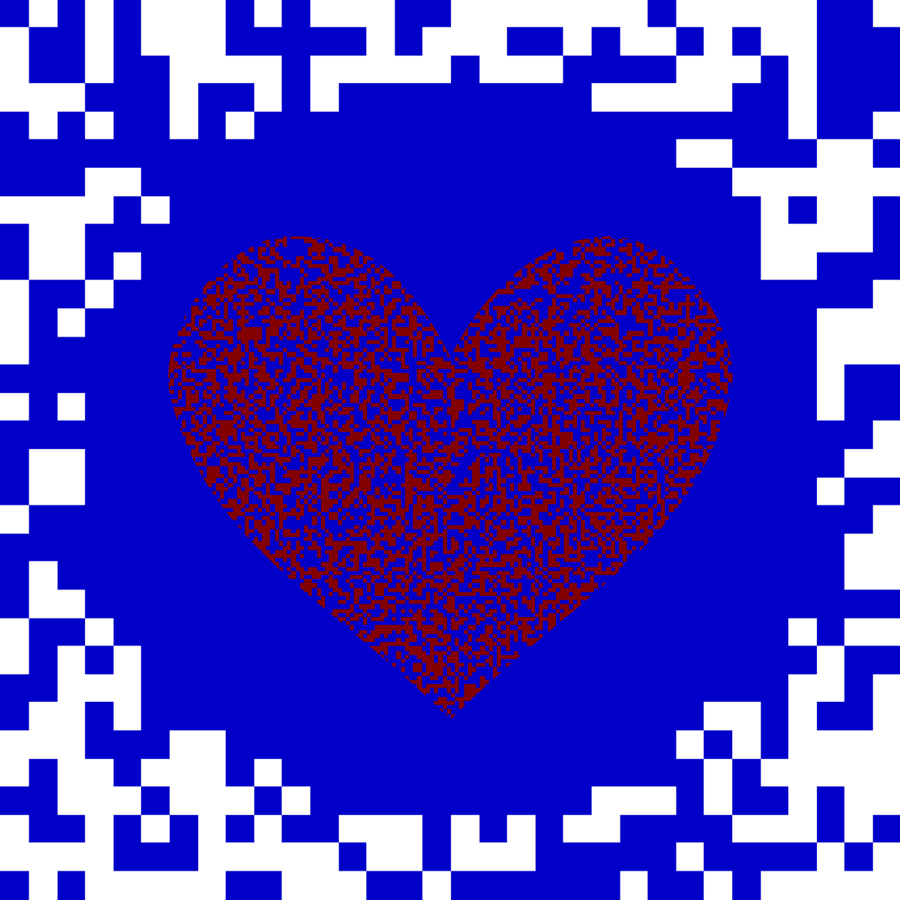
"kind of fluttering heart"
(踊るハートに似た錯視)
The heart apepars to move when the image is swayed.
(絵を動かすと、ハートが動いて見える)
Copyright Akiyoshi Kitaoka 2019 (September 23)
My favorite 2
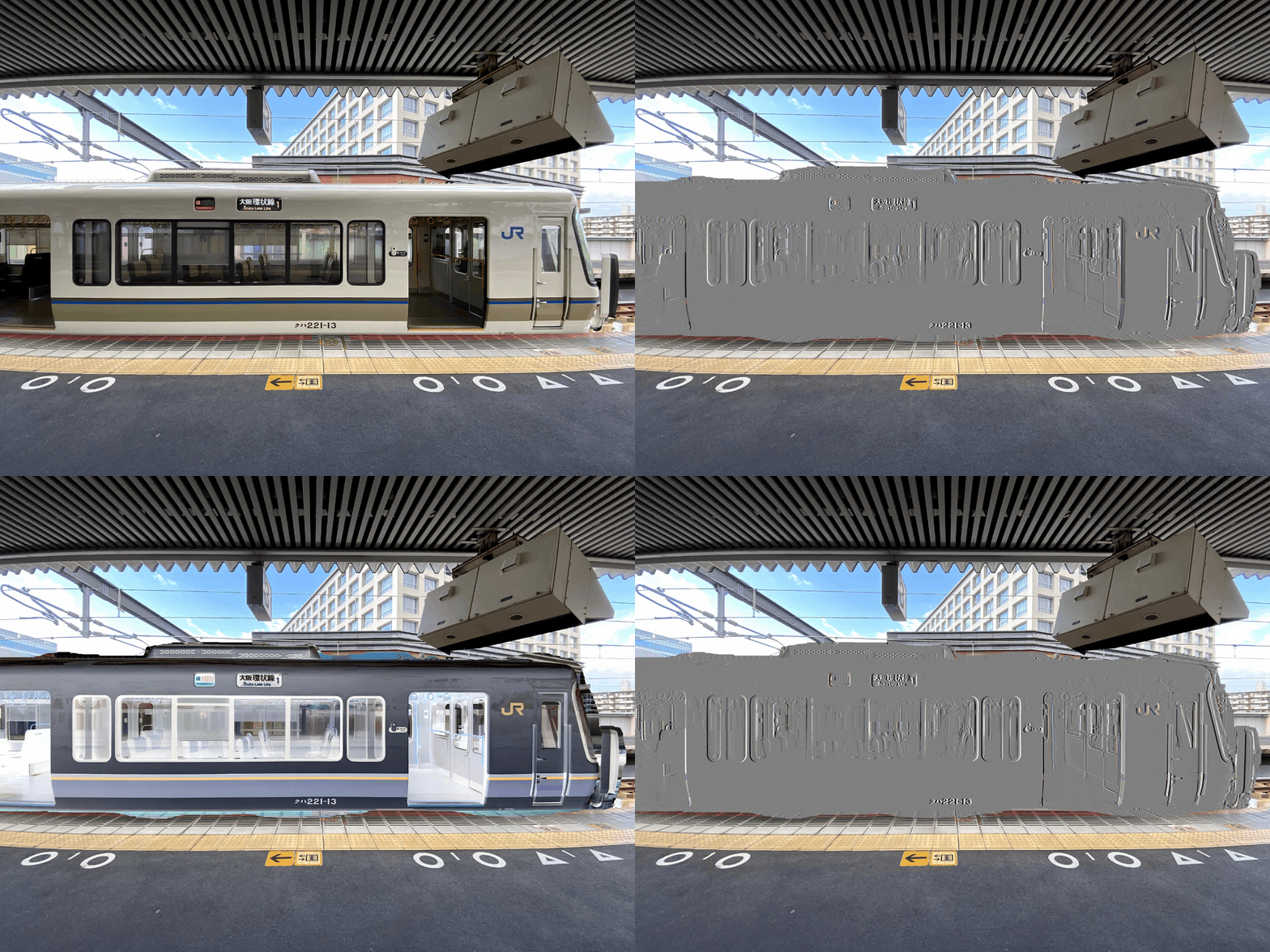
"A train that runs with its doors open"
(ドアを開けたまま走り出す電車)
A train appears to move rightward.
(電車が右に動いて見えるが、4枚の静止画の繰り返しである)
Copyright Akiyoshi Kitaoka 2021 (February 9)
北岡明佳 (2021) 「輝度変化による運動錯視(リバースファイなど)の再検討」 (2021年3月2日(火)15:40~16:20・第15回錯覚ワークショップ(Zoom Webinar)) Presentation (html)
My favorite 3

"Drifting fragile sheets of ice illusion"
(薄氷ドリフト錯視)
The narrower areas move to the right but appear in front of the areas moving to the left. This effect is created by causing a single still image to undulate in a square-wave pattern.
(幅の狭い領域が右に動いているが、それは左に動く領域よりも手前に見える。この効果は、1枚の静止画を(矩形波的に)波打たせたて作られる)
Copyright Akiyoshi Kitaoka 2025 (July 27)
4. Q & A
Q1: Do you have any useful illusions?
(質問1 役に立つ錯視はありますか?)
A: How about this? This is a viewpoint-free image hump.
(回答 これなんかどうでしょう。視点が固定されないイメージハンプです)
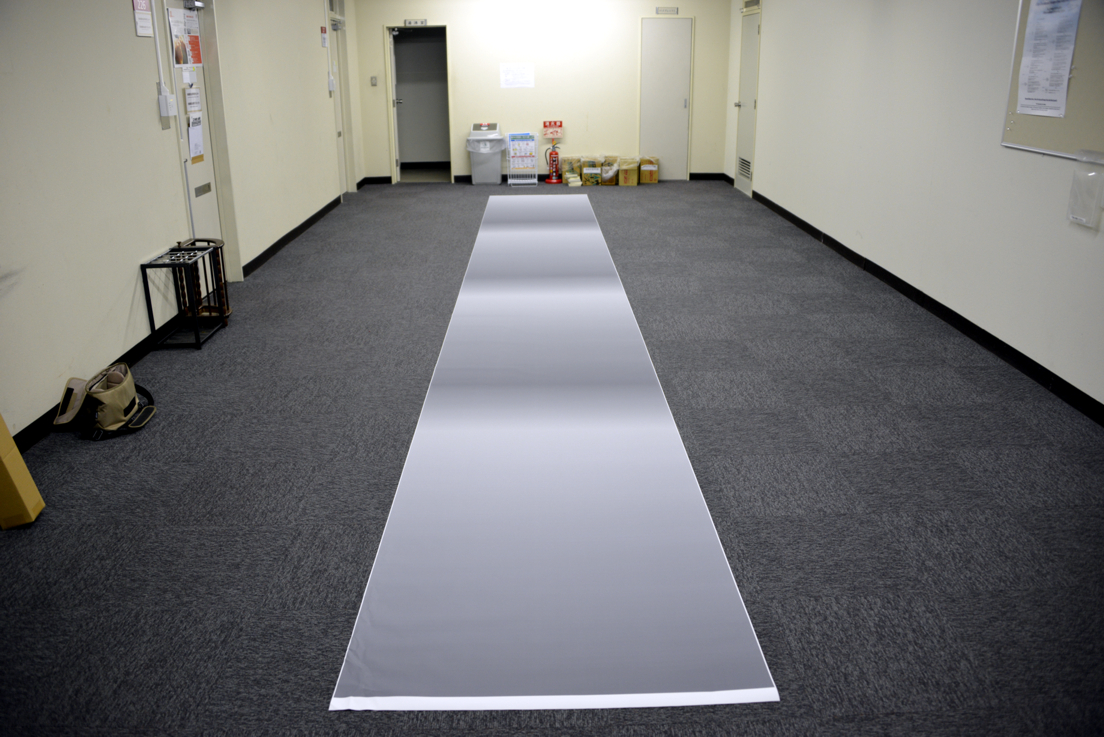
Copyright Akiyoshi Kitaoka 2018 (March 8)
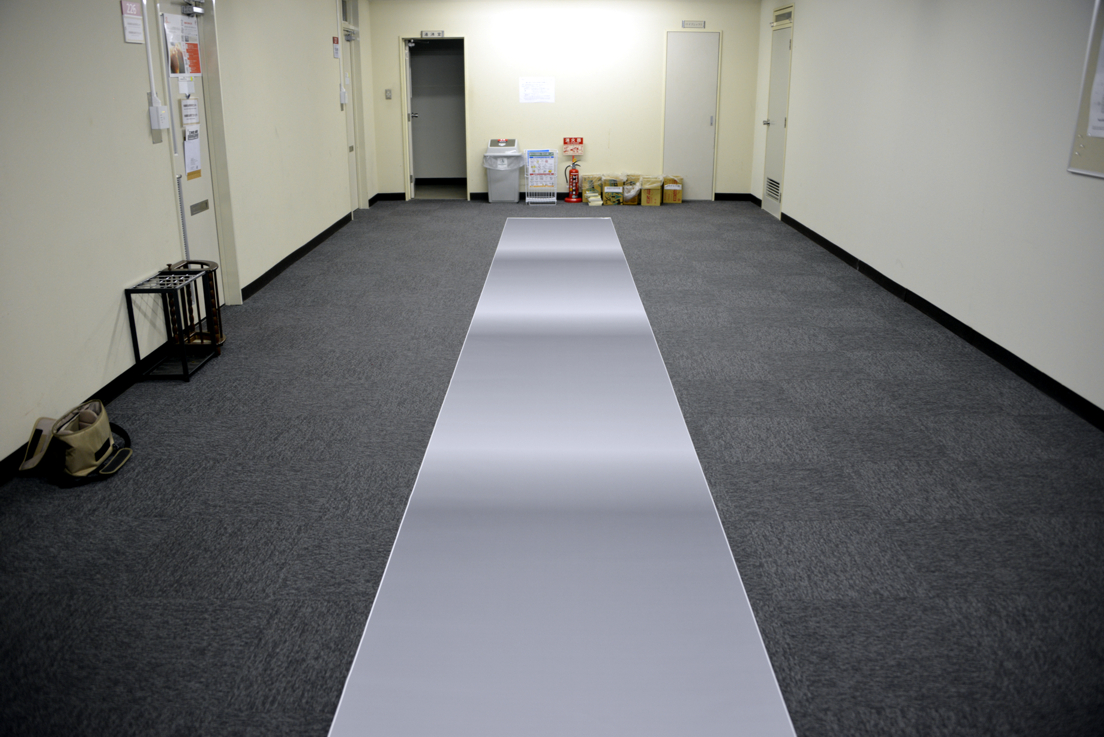
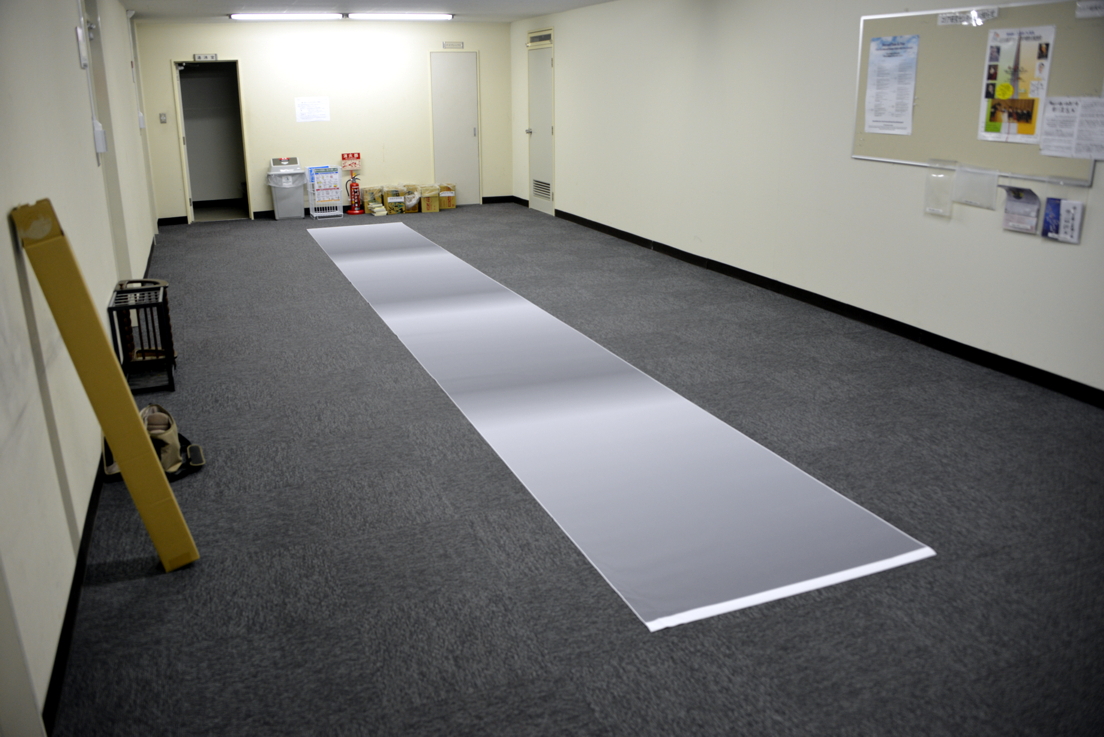
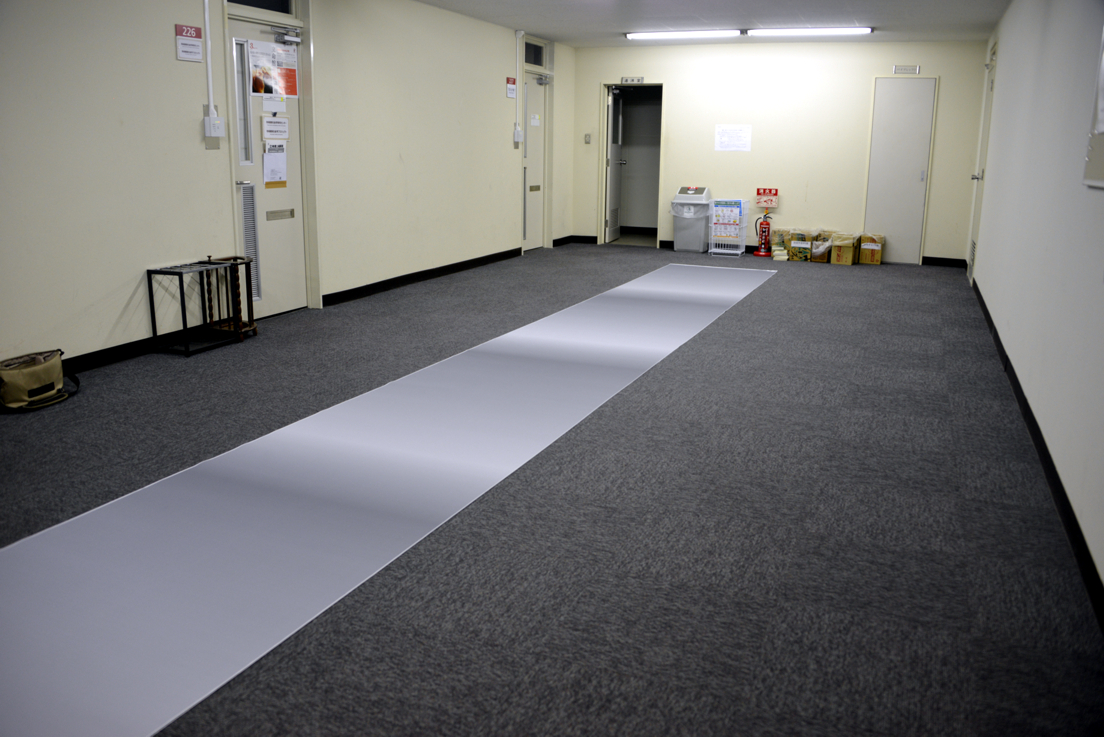
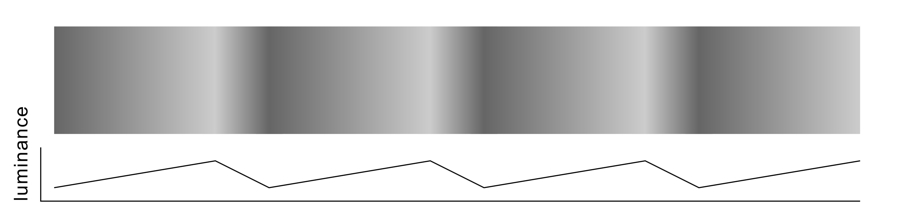
The stimulus is so simple. Just apply a triangular wave-like luminance
gradient!
(刺激は実に単純。三角波的に輝度勾配を付けるだけ!)
I have tried to promotel the product to some of the Japanese police departments
that are in charge of traffic administration, but so far I have not been
successful.
(警察やらいろいろなところに売り込みましたが、誰も反応してくれませんでした)
Q2: Why do you study visual illusions?
(なぜ錯視を研究しているのですか?)
A2: It is because I believe that the study of visual illusions can largely
contribute to the study of vision.
(マジレスすると、錯視を研究すると視覚のメカニズムが明らかになると(本気で)信じているからです)
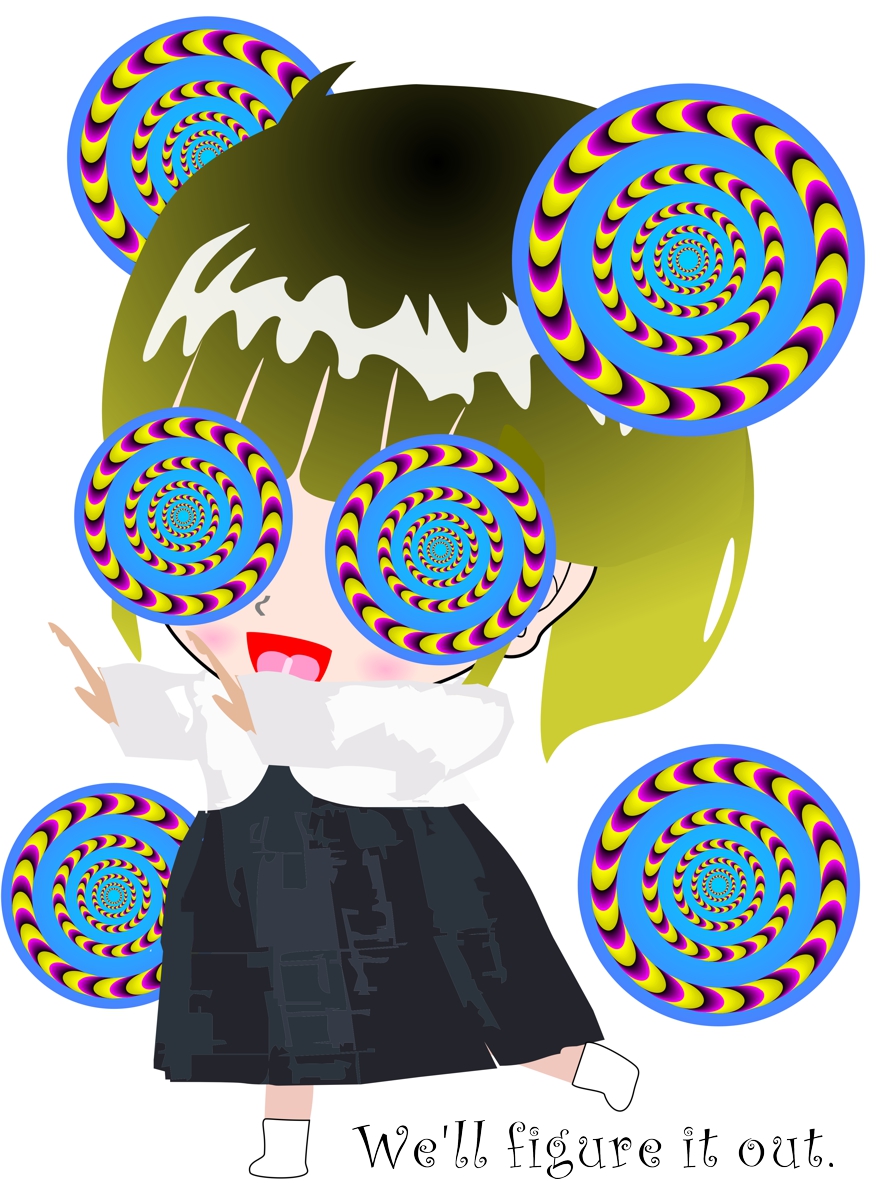
(何とかなるさ)
Q3: What would you recommend for studying visual illusions?
(錯視のおすすめ本はありますか?)
A3: It is actually a difficult question. How about this?
(いや~、錯視本はすぐに絶版になるからなあ。これなんかいかがですか? 高いけど)
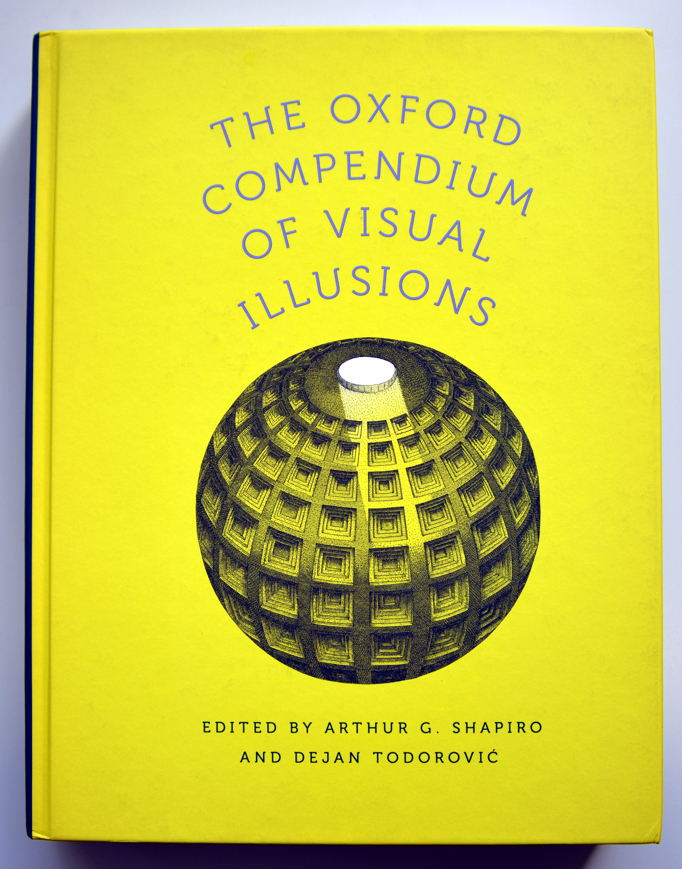
The Oxford Compendium of Visual Illusions
Arthur G. Shapiro and Dejan Todorovic
(シャピロ・トドロビッチ編「オックスフォード錯視事典」)
amazon
(尼尊)
Q4: How do you make illusion works?
(錯視はどうやって作っていますか?)
A4: Using graphic softwares (CorelDRAW) or programming (JavaScript)
(ドローソフトとプログラミングです)
e.g. How to make "Rotating snakes" using a graphic software
(たとえば「蛇の回転ですとこんな感じにつくります)

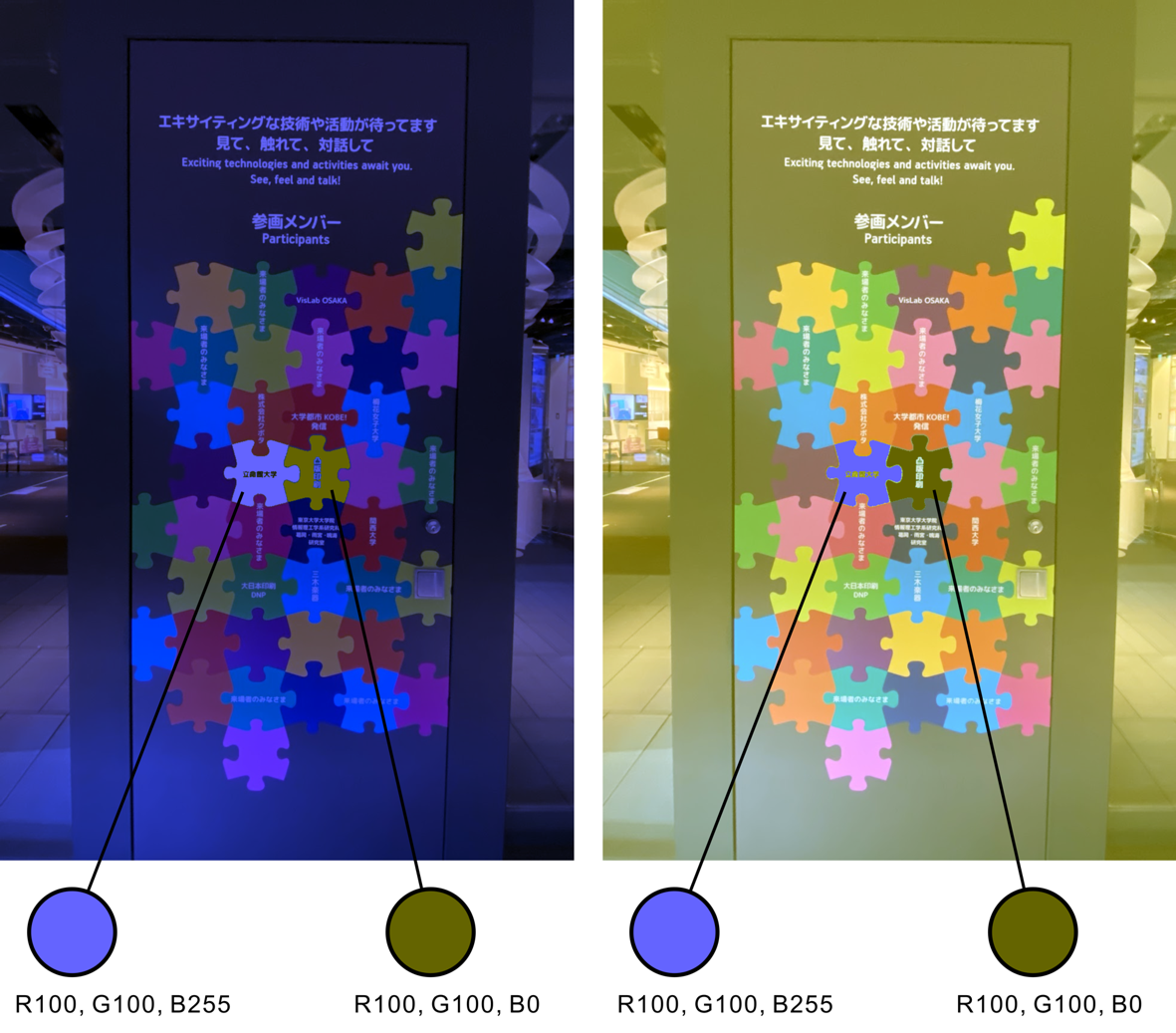
Q5: How do you explain the Dress?
(ドレスの錯視はどう説明しますか?)
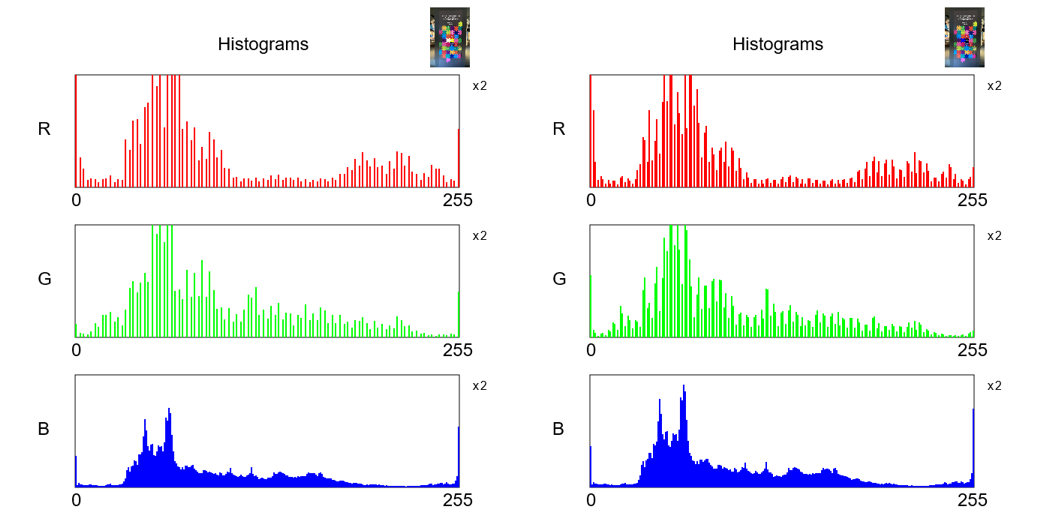
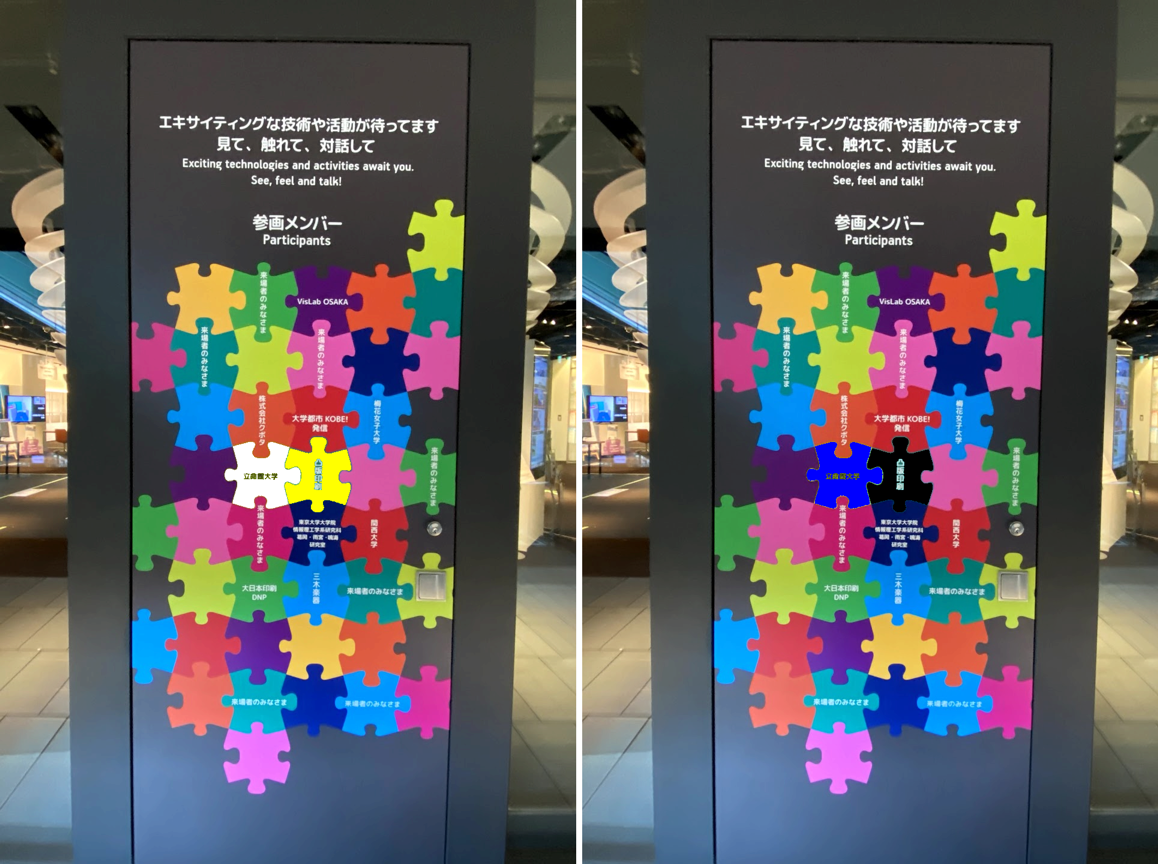
A5: I believe it is basically a color illusion as shown in the figure below.
(下図のような色の錯視との関連を考えています)
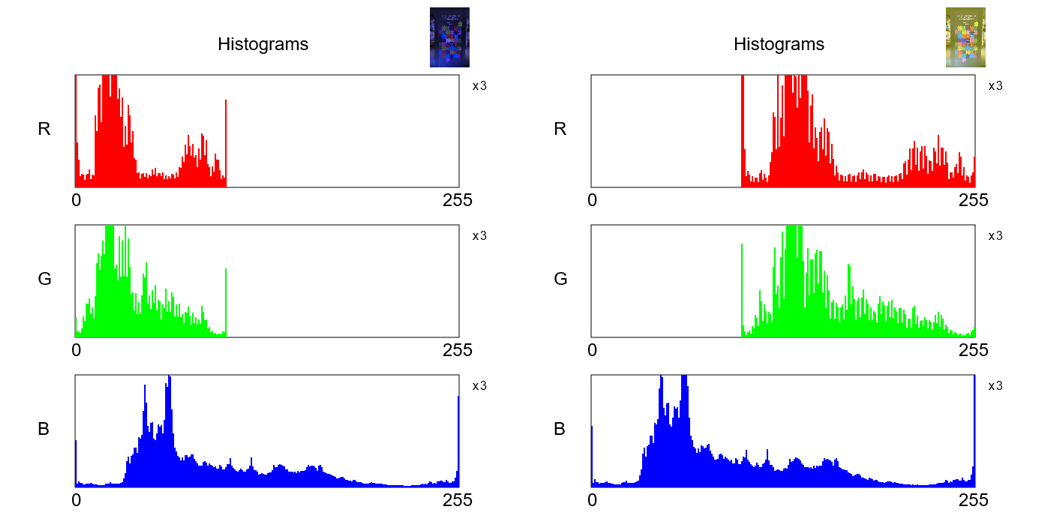
↓
histogram equlization
↓
Q6: How to make a hidden image?
(隠し絵はどうやってつくりますか?)
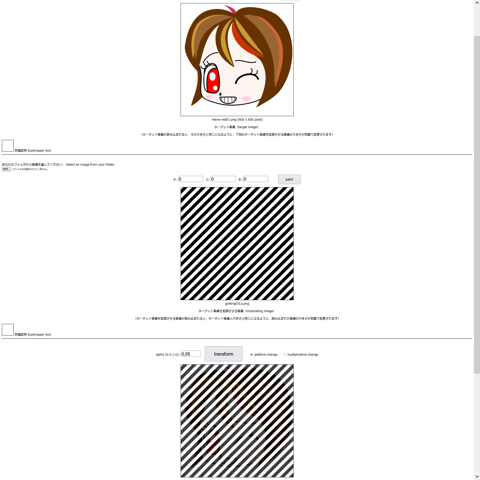
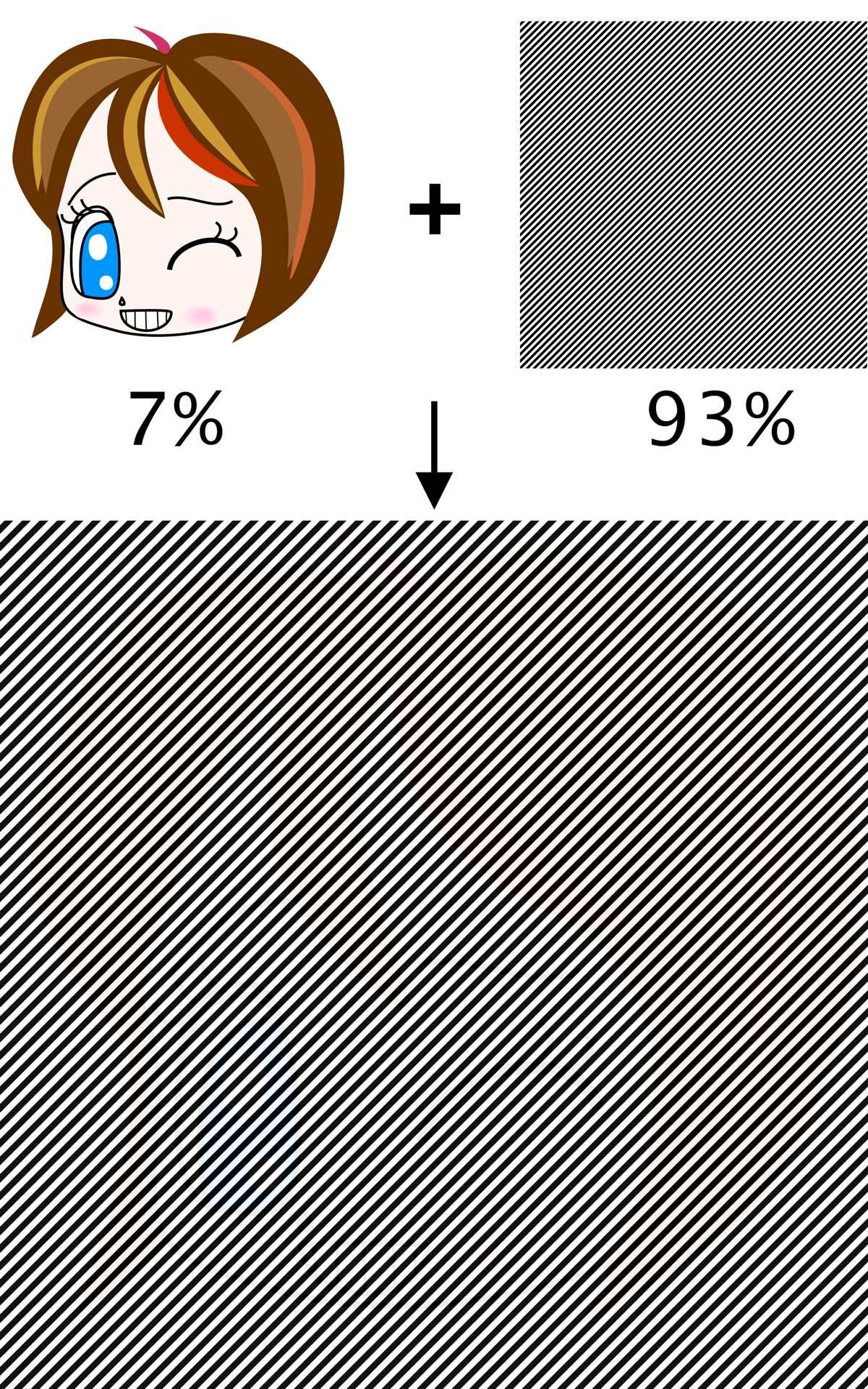
A6: The principle is simple. Use the program below.
(プログラムありますよ。どうぞ使ってください。できた作品はあなたの著作物です)
Let's make hidden images.
(隠し絵をつくろう)
Merging pictures tool
(画像合成ツール。上のリンクか下の画像をクリックしてください)
 おしまい
おしまい
Akiyoshi's illusion pages
(北岡明佳の錯視のページの英語版)